
To ship wine as a gift, choose the bottles, enter the recipient's street address, and order through a licensed shipper that handles state-by-state compliance. Wine can be sent to most, but not all, U.S. states, and an adult 21 or older must sign at delivery. It cannot go to a P.O. box, and most orders arrive in two to five business days. Domaine de la Rivière, a Russian River Valley family estate, ships its Pinot Noir, Chardonnay, and Rosé as gifts this way through Vinoshipper, with a handwritten note on request.
Below: whether you can ship wine as a gift, how direct-to-consumer shipping works, which states you can send to, who has to sign, why a P.O. box won't work, the steps, how long it takes, timing around heat, freezing weather, and the holidays, what happens on a missed delivery, and how gift notes work.
The wine gifts we ship
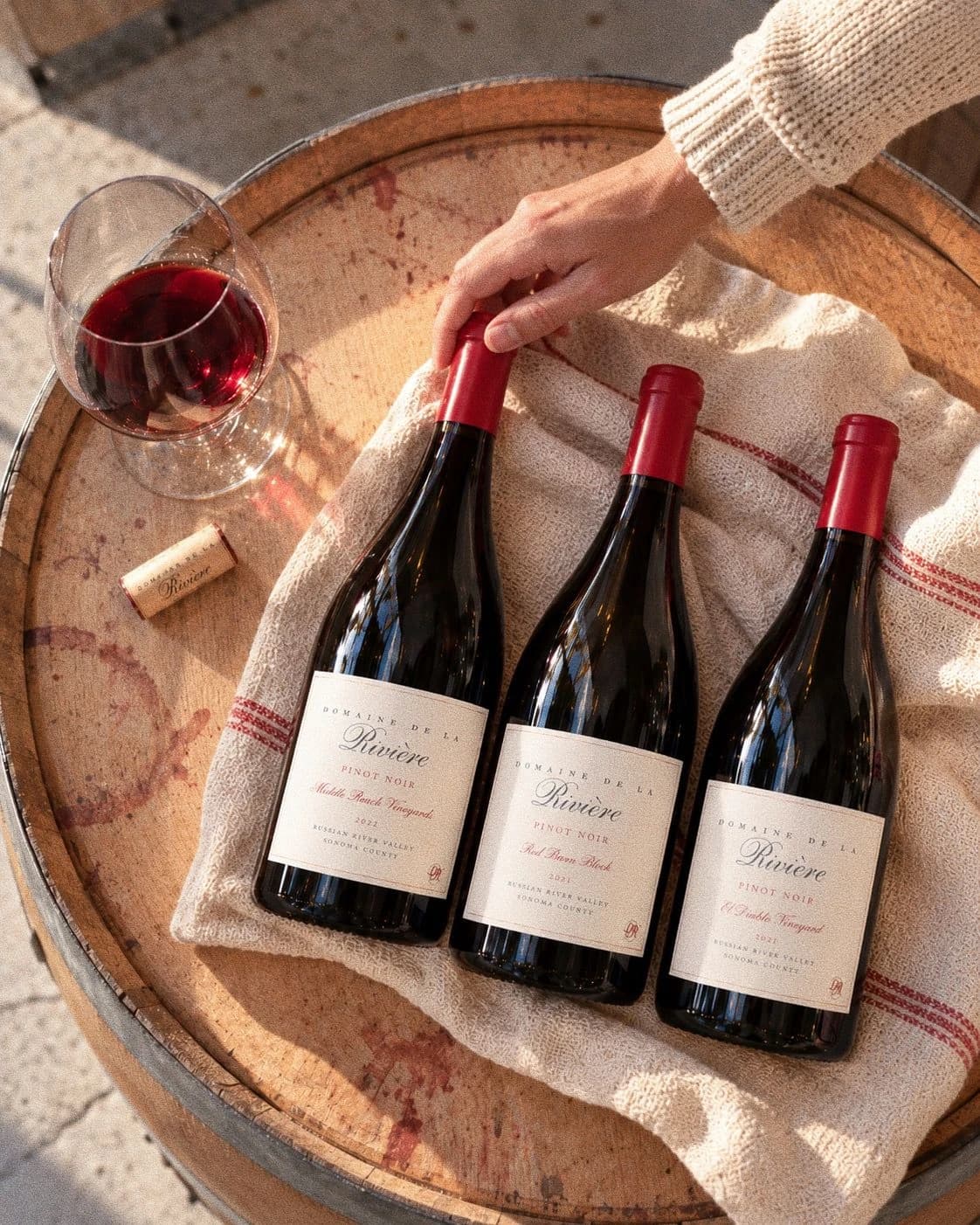
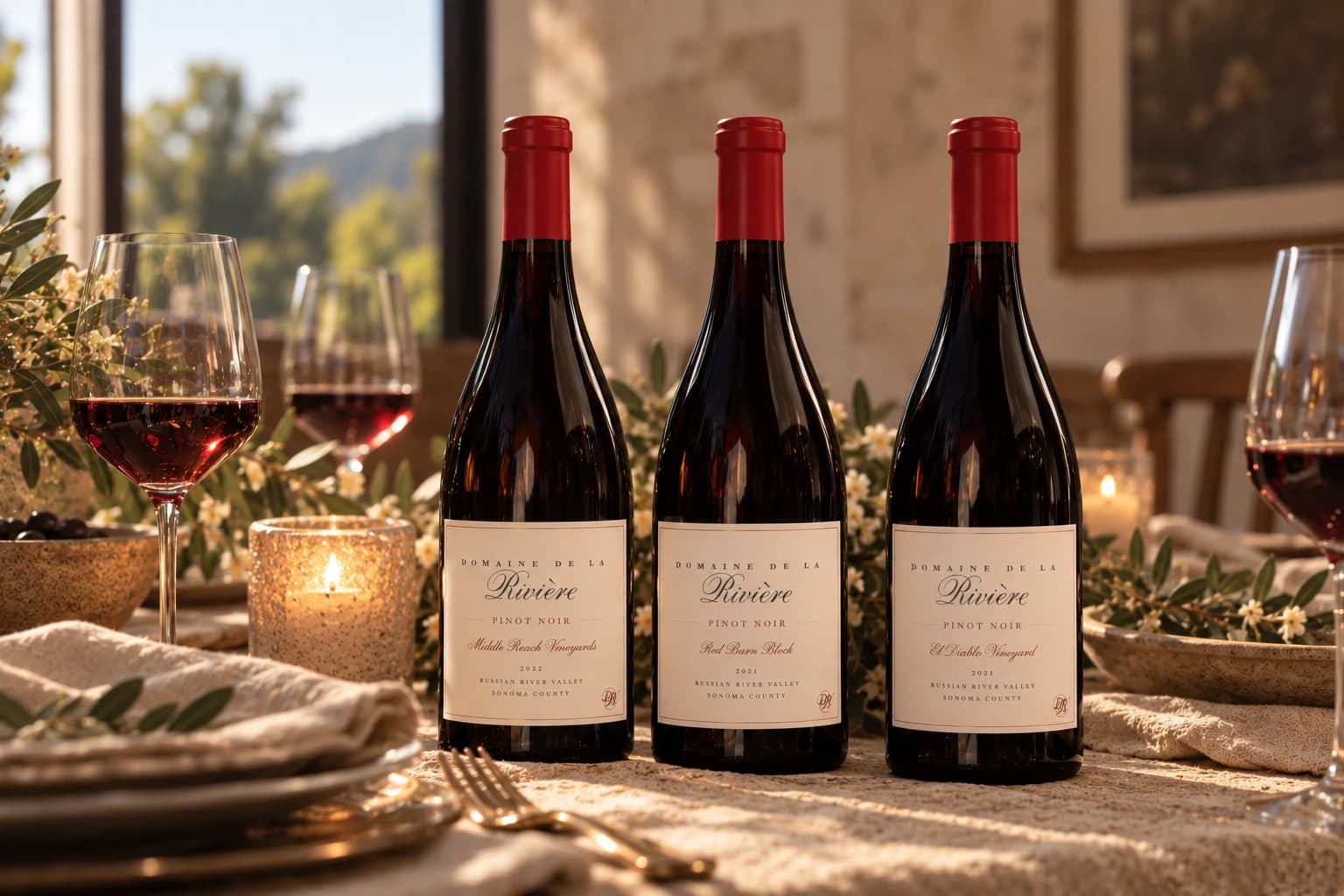
The short version: these are the estate bottles we ship as gifts most weeks of the year — matched to who is receiving them, with a handwritten note and the state-by-state rules handled on our end. How the shipping actually works follows below.


Shop the Set
Curated collections




Sending to a team or a list of people? The family etches bottles with a logo or names and ships to many addresses at once.
Custom & Corporate GiftsCan you ship wine as a gift?
Yes, in most cases. You can ship wine as a gift legally, but the rules are set state by state, so where a bottle can travel depends on the recipient's address, not the sender's. Licensed wineries and retailers ship direct-to-consumer only into states that permit it, and a licensed platform manages the permits, taxes, and reporting behind each order.
The important distinction is who does the shipping. A private individual cannot legally mail wine: the U.S. Postal Service does not accept alcohol, and private carriers only carry wine for licensed shippers that have signed an alcohol-shipping agreement. So the practical way to send a bottle of wine as a gift is to order it from a licensed winery or retailer that ships to the recipient's state.
Because compliance sits with the shipper, the giver does not need to know the regulations. A compliant checkout confirms whether wine can be sent to the address before payment, and flags a prohibited state rather than accepting an order that cannot be delivered.
How does direct-to-consumer wine shipping work?
Direct-to-consumer (DTC) wine shipping lets a winery sell and ship straight to a drinker in another state. The winery holds a federal basic permit from the TTB and a direct-shipper permit in each destination state, collects and remits that state's taxes, and reports volumes. Most small wineries use a licensed platform to manage all of it.
Every state that allows DTC shipments attaches conditions: a per-person volume cap (often measured in cases per year), a box labeled as containing alcohol and requiring an adult signature, delivery by an approved carrier, and sometimes registration of each label shipped. Across forty-plus states, that is more paperwork than a family estate can track by hand.
That is why compliance platforms exist. A licensed marketplace such as Vinoshipper acts as the seller of record, holds the permits, calculates taxes at checkout, files the state reports, and passes packing instructions to the winery. For the sender it is an ordinary online checkout; for the recipient it is a package that arrives by ground carrier with an adult-signature label on the box.
This is how we do it ourselves. Our wines ship through Vinoshipper to most U.S. states — not all, and we'd rather say so than promise otherwise. An adult 21 or older signs at the door, nothing goes to a P.O. box, and the checkout tells you before you pay whether it can reach the address. If you'd like a note in the box, or the same wine going to several people, email marla@domaineriviere.com and we'll sort it out by hand.
| Who | What they handle |
|---|---|
| The winery | Makes and packs the wine; hands it to the carrier. |
| The licensed platform | Permits, destination-state checks, taxes, state reports. |
| The carrier | Transport, alcohol labeling, the adult signature. |
| The sender | The wine, a street address, the timing. |
| The recipient | Is 21 or older, present, with photo ID. |
Which states can you ship wine to?
Wine ships to most U.S. states, but not all, and the list changes as laws change. Roughly forty-five states allow some form of winery direct shipping; a few prohibit it or restrict it to in-state producers, and several cap annual volume per recipient. The reliable check for a specific address is to start an order and let the shipper confirm.
Most states permit winery-to-consumer shipping under a permit with a case limit per household per year. A smaller group allows it only under narrower conditions — for example, requiring the buyer to have visited the winery in person — and a handful prohibit it outright. Retailer-to-consumer shipping is allowed in fewer states than winery shipping, which is one reason ordering direct from a producer often reaches more addresses than an online shop.
Because a legislature can change the rules in any given year, published maps go stale. The Wine Institute maintains a state-by-state summary (in the references), and a compliant checkout applies the current rules automatically. The honest answer to which states you can ship wine to is: most of them, and the checkout will tell you about the rest.
No responsible winery can promise all fifty states — the map moves with the law. For a specific address, the surest check is to begin the order and let the shipper confirm before you pay.
Who has to sign for a wine delivery?
An adult 21 or older must be present to sign and show a valid photo ID at delivery. Carriers require this for every alcohol shipment because state law and their own alcohol-shipping agreements make them responsible for not handing wine to a minor. The signer does not have to be the recipient — any adult at the address will do.
This rule trips up more gift deliveries than any other. A carrier cannot leave wine on a porch, in a lobby, or with a package room unless a person 21 or older signs in person, and a note asking the driver to leave it does not override the requirement. If no adult is available, the box goes back on the truck.
For a surprise gift, a workplace is often more reliable than a home, because someone is there during the day. If the recipient travels or keeps irregular hours, a quiet heads-up that a signature-required package is coming prevents a missed delivery without revealing what is inside. Most carriers also let the recipient use the tracking number to hold the box at a pickup location and sign there.
Why can't you ship wine to a P.O. box?
Wine cannot be shipped to a P.O. box for two reasons. Boxes are run by the U.S. Postal Service, which does not carry alcohol, and delivery requires an adult to sign and show ID in person, which a box cannot do. Licensed wine shipping needs a physical street address where someone 21 or older can receive the package.
The same applies to APO/FPO military addresses, which route through the postal system, and to some private mailbox services that accept packages without an ID check. If only a P.O. box is available, request a home or work address, or have the gift sent to yourself and deliver it in person.
How do you send wine as a gift, step by step?
Sending wine as a gift takes a few minutes: choose the bottles, enter the recipient's street address, confirm an adult 21 or older can sign, pick a delivery window with the weather in mind, add a gift note, and order through a licensed shipper. The shipper handles compliance, the winery packs the wine, and tracking follows the box to the door.
- Choose the wine. Pick a bottle, a pair, or a case. When the recipient's taste is unknown, a Pinot Noir, a balanced Chardonnay, or a dry Rosé suits most palates; a two-bottle set covers a red and a white drinker in one package. The bottle we send most often as a gift is our Shoshana Rosé — whole-cluster pressed, about 100 cases a year, and hard to dislike; the 2024 scored 93 from The Tasting Panel. For a red drinker, our Middle Reach Vineyards Pinot Noir 2021 (94, Wine Enthusiast Cellar Selection) is the easy pick.
- Enter the recipient's address. Use a home or business street address where someone is present during the day — never a P.O. box. The shipper confirms it can deliver to that state before payment. Double-check apartment or suite numbers; a missing unit number is a common cause of a returned package.
- Confirm someone 21+ can sign. An adult 21 or older must be present and show photo ID. A workplace, or a household where someone is usually home, beats an empty house. If unsure, tell the recipient a signature-required package is coming.
- Pick the timing. Ground shipping from California takes roughly two to five business days. For a dated occasion, build in a few extra days rather than targeting the exact morning, and allow for weather holds and signature reattempts.
- Add a gift note. Most licensed checkouts print a short gift message and pack it with the wine, with prices left off the packing slip. For a handwritten card, several addresses, or a corporate order, contact the winery directly.
- Place the order and share the tracking. Complete checkout through the licensed shipper. The winery packs the wine in a protective shipper and hands it to the carrier. Passing the tracking number to the recipient lets them watch for the driver or reroute to a pickup point.
How long does it take to ship wine?
Most wine gifts ship by ground and arrive in two to five business days, depending on distance from the winery. From Northern California, the West Coast takes one to two days, the Mountain and Central states two to three, and the East Coast four to five. Add a day or two of processing before the box leaves the winery.
| Destination from California | Typical ground transit | Notes |
|---|---|---|
| West Coast | 1–2 business days | Rarely needs expedited service; summer heat is the main concern. |
| Mountain and Central states | 2–3 business days | Winter freeze holds are common December through February. |
| East Coast and Southeast | 4–5 business days | Summer heat and holiday volume are the usual delays. |
| Expedited (2-day or overnight) | 1–2 business days | For hot-weather shipments or last-minute gifts; costs more. |
Wine ships heavy — a bottle in its shipper weighs about four pounds, a case around forty — so ground is the default and expedited service is priced accordingly. Carriers count business days only, and alcohol generally does not deliver on weekends, so a Thursday departure to a distant address often lands the following Tuesday.
When should you ship wine to avoid heat, freezing, or holiday delays?
Wine is sensitive to temperature, so timing matters. In summer, or to hot regions, ship early in the week so a package does not sit in a trailer over a weekend, and consider expedited service. In deep winter, a bottle can freeze in transit through cold states. Before the holidays, order well ahead — carriers slow under peak volume.
Summer heat holds
Sustained heat above roughly 80°F can cook a wine — the fruit turns stewed and the cork pushes up as the liquid expands — and trailers run far hotter than the outside air. Many wineries pause shipping to hot regions during the warmest weeks, hold orders until a cooler window opens, and ship Monday through Wednesday so nothing sits over a weekend. A weather hold is not a lost order; it is the winery protecting the gift.
We do exactly this. Orders are packed here in Windsor and go out early in the week; when a heat wave is sitting over the route — or a hard freeze, in winter — we hold the box a few days rather than send it into it, and we let you know. If a date can't move, we'll suggest expedited service so the wine spends one night in a trailer instead of four.
Winter freeze holds
The opposite problem arrives December through February. Wine freezes at around 15–20°F, and a frozen bottle expands enough to push the cork out or crack the glass. Routes through the Upper Midwest, the Northeast, and the Mountain states are the most exposed, and wineries will delay a departure a few days to let a cold snap pass.
Holiday timing
- For a birthday, anniversary, or holiday, order at least a week ahead — signatures, weather, and carrier volume can each add a day.
- For the winter holidays, order by early-to-mid December for ground service to the East Coast; the final week is the one time no carrier can guarantee a specific day.
- Mother's Day and Father's Day fall on Sundays, so target the Thursday or Friday before.
- Send to an address where the wine comes indoors soon after it arrives — a porch in July or January undoes careful packing.
Carriers publish their own holiday deadlines each autumn; the USPS calendar (in the references) is a useful benchmark even though wine travels by private carrier.
What happens if a wine delivery is missed?
If no adult is available to sign, the carrier leaves a notice and reattempts delivery, typically up to three times on consecutive business days. After the final attempt, the package is held briefly at a local carrier facility for pickup with ID, then returned to the winery. Returned wine usually incurs a reshipping fee.
The recipient has more control than most people realize. With the tracking number they can usually reschedule for a day they will be home, redirect to a carrier pickup location, or, in some states, authorize a different street address. What they cannot do is waive the signature. If a box returns to the winery, the sender is contacted to confirm a new address and date before it goes out again.
How do gift notes and messages work with a wine delivery?
Most licensed wine checkouts include a gift-message field. The message is printed on a card or packing slip and packed inside the box, and prices are left off when the order is marked as a gift. For a handwritten card, custom wrapping, or a message going to many recipients, wineries handle the request directly by email.
The gift message is usually the only thing identifying the sender, so sign it; the label shows the winery's return address, which keeps a surprise intact until the box is opened. For wine going to several people — a family, a client list, a wedding party — one email to the winery with the addresses and the message is simpler than separate orders, and lets the winery coordinate timing across the batch. That's how we handle it here: Marla reads every one of those emails, writes the cards herself, and staggers the departures so a client list doesn't all land on the same Tuesday. The same applies to custom bottles, etched or private-labeled for a company or a wedding party: every box still needs an adult 21 or older to sign, and none can go to a P.O. box.
The wines we ship as gifts are at the top of this page — pick one and we'll box it with a handwritten note and handle the state-by-state rules. Just tell us where it's going.
Send a Wine GiftFrequently asked questions
- How do you ship wine as a gift?
- Choose the bottles, enter the recipient's home or work street address (not a P.O. box), confirm an adult 21 or older can sign at delivery, pick a delivery window that accounts for weather, add a gift note, and place the order through a licensed shipper that handles the state-by-state compliance. Most shipments arrive within two to five business days.
- Can you ship wine to another state as a gift?
- To most U.S. states, yes, but not all — direct-to-consumer wine shipping is regulated state by state, and a few states restrict or prohibit it. A licensed shipping platform confirms whether it can reach a given address before payment. No winery can promise all fifty states.
- Can I mail a bottle of wine myself?
- No. The U.S. Postal Service does not accept alcohol, and private carriers only carry wine for licensed shippers with an alcohol-shipping agreement. To send a bottle of wine as a gift, order it from a licensed winery or retailer that ships to the recipient's state.
- Does someone have to be home to receive a wine gift?
- Yes. An adult 21 or older must be present to sign and show a valid photo ID at delivery — carriers cannot leave wine unattended. Sending to a workplace, where someone is present during the day, often makes a surprise gift easier to deliver, and the recipient can use the tracking number to hold the package at a pickup location.
- Can you ship wine to a P.O. box?
- No. P.O. boxes are run by the postal service, which does not carry alcohol, and delivery requires a signature and an ID check. Wine can only go to a physical street address — a home or business where an adult 21 or older can receive it.
- How long does it take to ship wine?
- Ground shipping from California typically takes one to two business days to the West Coast, two to three to the Mountain and Central states, and four to five to the East Coast, plus a day or two of processing. Alcohol shipments generally deliver on business days only.
- When is the best time to ship wine so it doesn't get too hot or freeze?
- Ship early in the week so a package doesn't sit over a weekend. In summer, or to hot regions, consider expedited service or wait for a cooler window; in deep winter, cold-state routes can freeze a bottle. Many wineries hold shipments during extreme weather. For dated occasions, order a week ahead.
- What happens if I miss a wine delivery?
- The carrier leaves a notice and typically reattempts on the next business days, up to three times, then holds the package briefly at a local facility for pickup with ID before returning it to the winery. Using the tracking number, the recipient can reschedule or redirect to a pickup location.
- Can I send a bottle of wine to someone in Texas as a gift?
- Usually, yes. Texas allows wineries that hold a Texas direct-shipper permit to ship wine to adult residents, and a licensed platform such as Vinoshipper checks the address at checkout before you pay. Order from the winery or retailer, enter the Texas street address, and an adult 21 or older signs at delivery.
- Can champagne or sparkling wine be shipped as a present?
- Yes. Sparkling wine ships under the same state-by-state rules as still wine, from a licensed winery or retailer to a street address, with an adult signature. It is heavier and more pressure-sensitive, so avoid shipping it through very hot or freezing weather, and let it rest a day before opening.
- What's the easiest way to send a nice bottle of wine to someone in another state?
- Buy it directly from a winery that ships to that state and have the winery send it. The winery's licensed checkout handles the permits, taxes, and adult-signature label, so you only enter the address and a gift note. Domaine de la Rivière ships its estate wines this way and will add a handwritten note on request.
- Can you include a personal note or send wine to more than one person?
- Most licensed checkouts print a short gift message and omit prices from the packing slip. For a handwritten note, an order going to several addresses, or a corporate gift, email marla@domaineriviere.com and the family arranges the details directly.
References