
The Russian River Valley is a cool-climate American Viticultural Area (AVA) in Sonoma County, California, established in 1983 and named for the river that runs through it. Marine fog pulled inland off the Pacific each night makes it one of the country's best regions for Pinot Noir and Chardonnay. It lies northwest of Santa Rosa, roughly 90 minutes north of San Francisco, around the towns of Healdsburg, Windsor, Forestville, and Guerneville. Domaine de la Rivière, a New York family's estate in the Middle Reach, has grown wine here since 2011, so this guide is written from the vineyard.
Our family has farmed here since 2011 — we left New York, bought a neglected Middle Reach vineyard, and replanted it top to bottom — so this is the valley as we know it from the vineyard rather than from a tour bus. Below: where the Russian River Valley is and how to read it on a map, why the fog shapes the wine, what the soils do, how its sub-areas differ, what to taste and which clones matter, how to plan a Russian River Valley wine tasting trip, and when to come.
Where is the Russian River Valley?
The Russian River Valley is in western Sonoma County, about 90 minutes north of San Francisco. It follows the river from around Healdsburg in the north, southwest through Windsor and toward Forestville and Guerneville, before the river bends for the Pacific at Jenner. Santa Rosa sits on its eastern edge. The AVA covers roughly 96,000 acres, of which about 15,000 are planted to vineyard.
On a map, start at Healdsburg and follow the river southwest. The Russian River itself rises in Mendocino County and runs south past Healdsburg, then turns west near Forestville and Guerneville toward the coast. The AVA is defined less by a hard boundary than by climate: the reach the coastal fog can travel to. Where the fog settles most nights, you are in the Russian River Valley; where it thins, you have left it.
Two roads carry most of the vineyard traffic. Westside Road runs southwest from Healdsburg along the river's west bank through the vineyards of the Middle Reach; Eastside Road parallels it on the opposite bank toward Forestville. U.S. Highway 101 runs north–south along the valley's eastern side through Windsor and Santa Rosa, and Charles M. Schulz Sonoma County Airport (STS), between Windsor and Santa Rosa, is the closest commercial airport.
| Town | Where it sits | Drive time from Healdsburg |
|---|---|---|
| Healdsburg | North end of the AVA; plaza town where three AVAs meet | — |
| Windsor | Eastern edge, along Hwy 101 | About 10 minutes |
| Forestville | West, where the river bends toward the coast | About 25 minutes |
| Sebastopol | South-central, in the Goldridge soil belt | About 30 minutes |
| Guerneville | Far west, among redwoods along the lower river | About 35 minutes |
| Santa Rosa | Eastern boundary; the county seat | About 20 minutes |
Why is the Russian River Valley so good for Pinot Noir and Chardonnay?
The answer is fog. Almost every evening in the growing season, marine air moves inland through the Petaluma Gap and up the river's channel from Jenner, settles over the valley overnight, and burns off by mid-morning. That daily swing — warm afternoons, cold nights, often 35°F or more apart — lets grapes ripen slowly and hold their natural acidity, which is exactly what cool-climate Pinot Noir and Chardonnay need.
The mechanism is simple. Inland California heats up during the day; that hot air rises and pulls cold, damp Pacific air in through low points in the coastal hills. In the Russian River Valley the two main entry points are the Petaluma Gap to the south and the river mouth to the west, so fog arrives from two directions and lingers longest where the two flows meet. On a typical July day the fog thins between 10 and 11 in the morning, afternoons reach the low to mid 80s, and the fog is back by early evening.
For the vine, that pattern does three things. Cool nights preserve malic and tartaric acid, so wines stay fresh rather than flat. Moderate daytime heat keeps sugar accumulation gradual, so grapes reach flavor ripeness at modest potential alcohol. And a long, mild season — Pinot Noir here is often picked from late August through September, Chardonnay into early October — gives thin-skinned Pinot time to develop aroma without the skins baking. It is the same reason the region runs cooler than the Napa Valley over the Mayacamas to the east.
What do the soils add?
The valley's best-known soil is Goldridge: a fine sandy loam formed from ancient marine sediment, low in fertility and quick to drain. It dominates the Sebastopol–Green Valley belt and keeps vine vigor in check, which concentrates flavor in small berries. Closer to the river, in the Middle Reach, vineyards sit on gravelly alluvial benchland and loam terraces the river laid down over time, again well-drained. Heavier Huichica clay loams appear on the eastern side. The common thread is drainage: on these soils the vine works for its water, and the fruit shows it.
Shop the Set
Curated collections
Does the whole Russian River Valley taste the same?
No. The valley is large enough that fog reaches its western and southern edges more than its warmer northern and eastern ones, so wines differ across it. Growers speak of informal neighborhoods within the AVA — the Middle Reach along the river between southern Healdsburg and Forestville, the Santa Rosa Plain, the Sebastopol Hills, Laguna Ridge — plus the cooler Green Valley of Russian River Valley, a smaller AVA nested inside the larger one.
| Neighborhood | Where | Character |
|---|---|---|
| Middle Reach | Along the river from southern Healdsburg to Forestville, mostly off Westside and Eastside roads | One of the oldest Pinot Noir stretches in the AVA; gravelly benchland; slightly warmer than the south, giving darker fruit, more structure, and longevity. |
| Green Valley | Southwest, around Sebastopol and Forestville; its own nested AVA | The coolest, foggiest pocket; Goldridge soils; high-acid, red-fruited Pinot Noir and taut Chardonnay; also sparkling wine. |
| Laguna Ridge | Between Sebastopol and Forestville, above the Laguna de Santa Rosa | Goldridge soils on gentle ridges; bright, aromatic Pinot Noir with fine tannin. |
| Sebastopol Hills | Far south, closest to the Petaluma Gap | Wind-exposed and very cool; lean, savory, late-ripening wines. |
| Santa Rosa Plain | Eastern floor toward Santa Rosa and Windsor | Warmer, more even ripening; rounder, fuller styles of both grapes. |
Cooler pockets tend to give more delicate, higher-acid wines; warmer ones give rounder, fuller styles. For a first visit you do not need to memorize the sub-areas — but tasting the same grape from two of them is one of the clearest ways to understand the place.
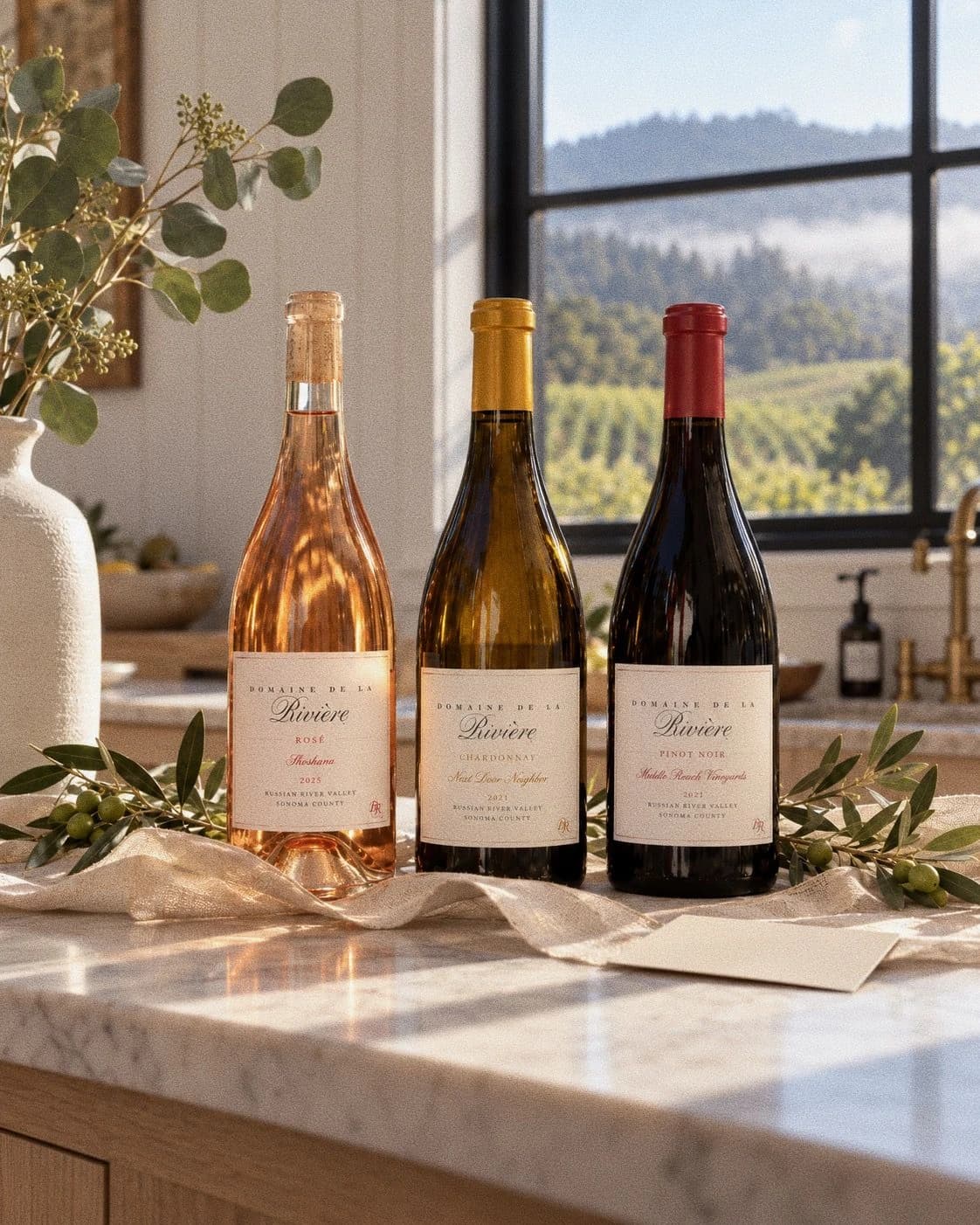
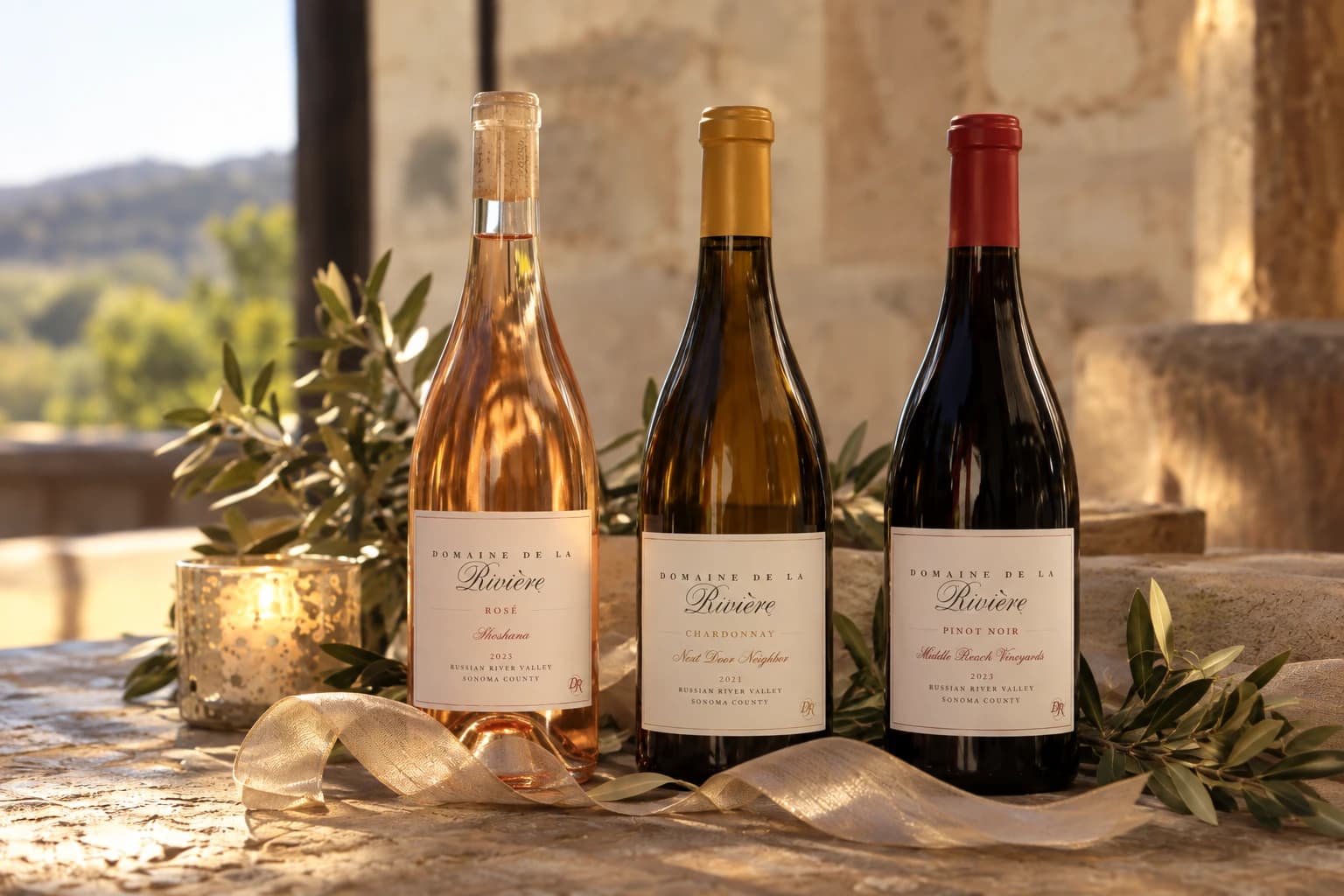
The Middle Reach is where Domaine de la Rivière sits. Its Vineyard eleven, 11 acres of Pinot Noir on Goldridge and loam soils, planted in 2016 and 2018 to four clones — Swan, Mt. Eden, Pommard, and Vosne-Romanée — behaves the way the table says this stretch should: darker fruit and more structure than the Sebastopol side, with the fog still sitting on it most mornings until ten.
What wines is the Russian River Valley known for?
Russian River Valley is Pinot Noir and Chardonnay country first — together they account for the majority of the AVA's plantings — with Rosé of Pinot Noir, traditional-method sparkling wine, and old-vine Zinfandel also grown here. If you are new to the region, taste a Chardonnay and a Pinot Noir side by side: the same fog and soils shape both, and comparing them is the quickest way to read the valley's character.
| Wine | What to expect | A useful example to look for |
|---|---|---|
| Pinot Noir | Red-fruited and aromatic — cherry, raspberry, cranberry, with cola, tea, and forest-floor notes as it ages — over fresh acidity and fine tannin. Typically 13–14.5% alcohol. The region's calling card. | Single-vineyard or single-block bottlings from the Middle Reach, which show the darker, more structured end of the valley. |
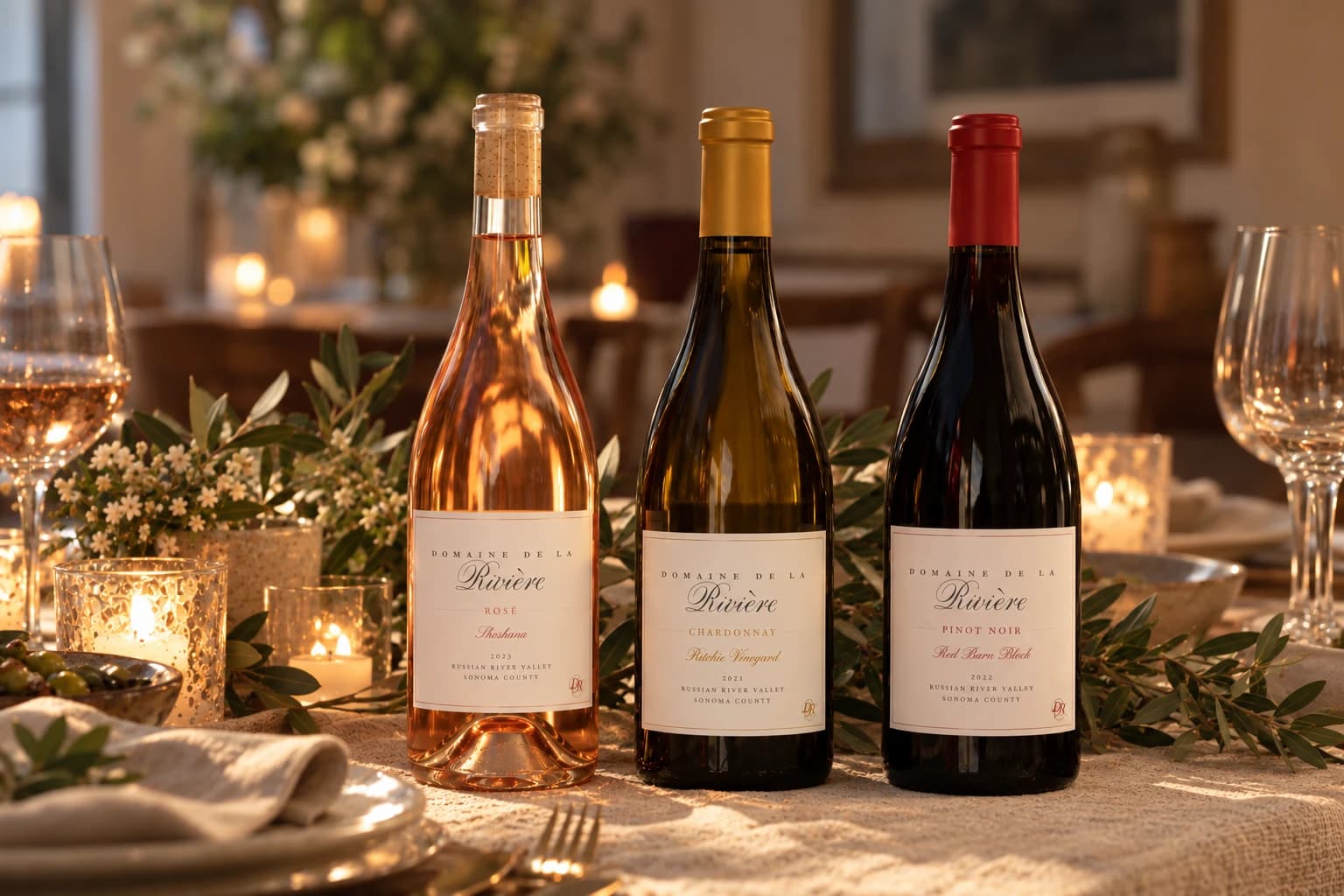
| Chardonnay | Citrus and orchard fruit over a mineral, savory core; balanced rather than heavily oaked, with more acidity than warmer California regions. | Old-vine sites such as Ritchie Vineyard — planted in 1972 to the Old Wente clone and one of California's most celebrated old-vine Chardonnay vineyards. Domaine de la Rivière farms a block there with Kent Ritchie; its 2022 Ritchie Vineyard Chardonnay scored 96 from The Tasting Panel and 95 with an Editor's Choice from Wine Enthusiast, which says more about the vineyard than the winery. |
| Rosé of Pinot Noir | Dry, pale, and bright — usually whole-cluster pressed rather than bled off a red ferment, so it reflects the vineyard rather than reading as a by-product. | A rosé made from dedicated Pinot Noir fruit, released the spring after harvest. |
| Sparkling wine | Traditional-method blends of Pinot Noir and Chardonnay; the cool Green Valley corner is a historic source. | Blanc de blancs or brut from Green Valley fruit. |
| Zinfandel | Old, dry-farmed plantings survive from the valley's pre-Pinot era; brambly and spiced, brighter than inland Zinfandel. | Vineyards planted before World War II, often field blends. |
Why do growers here talk about clones?
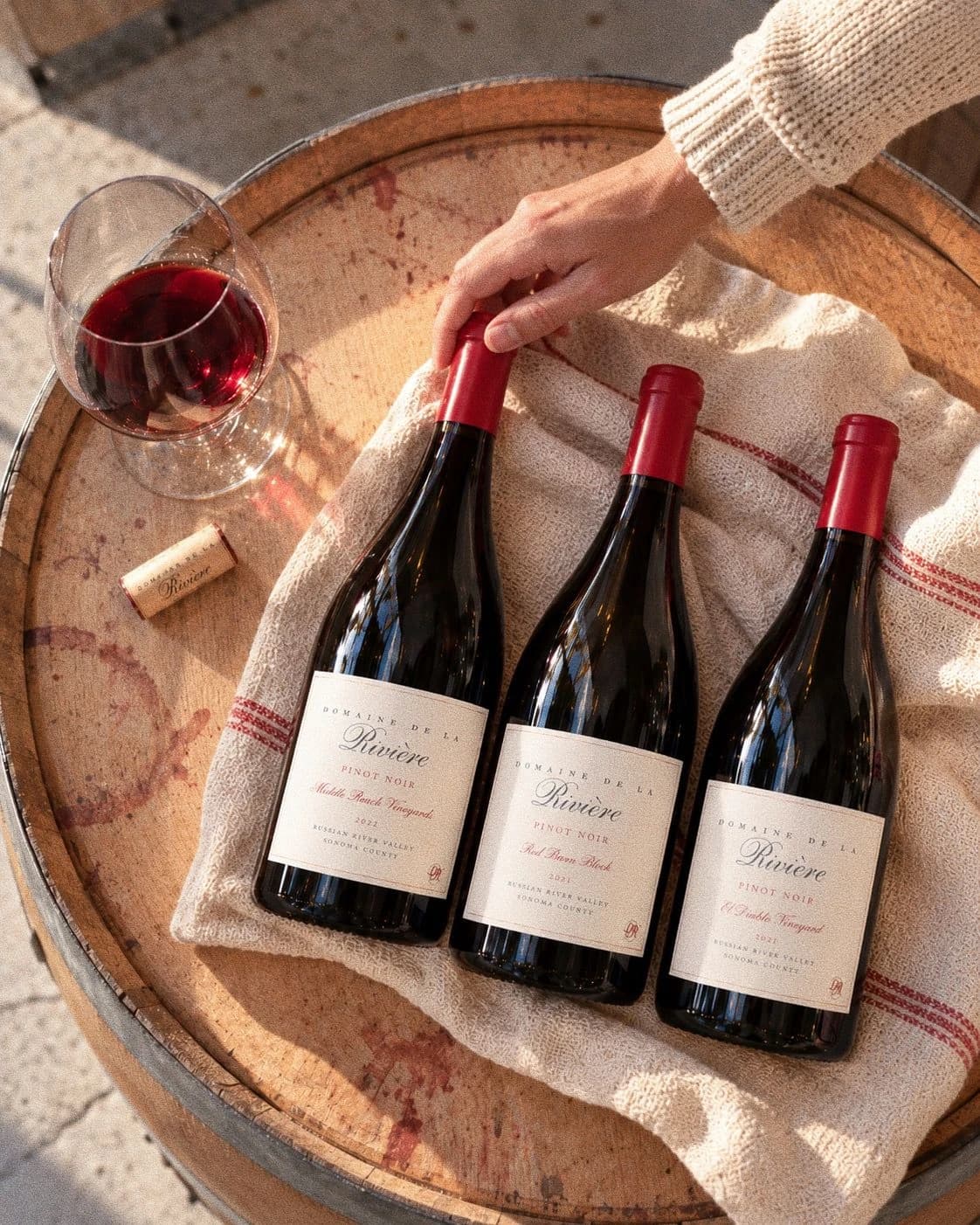
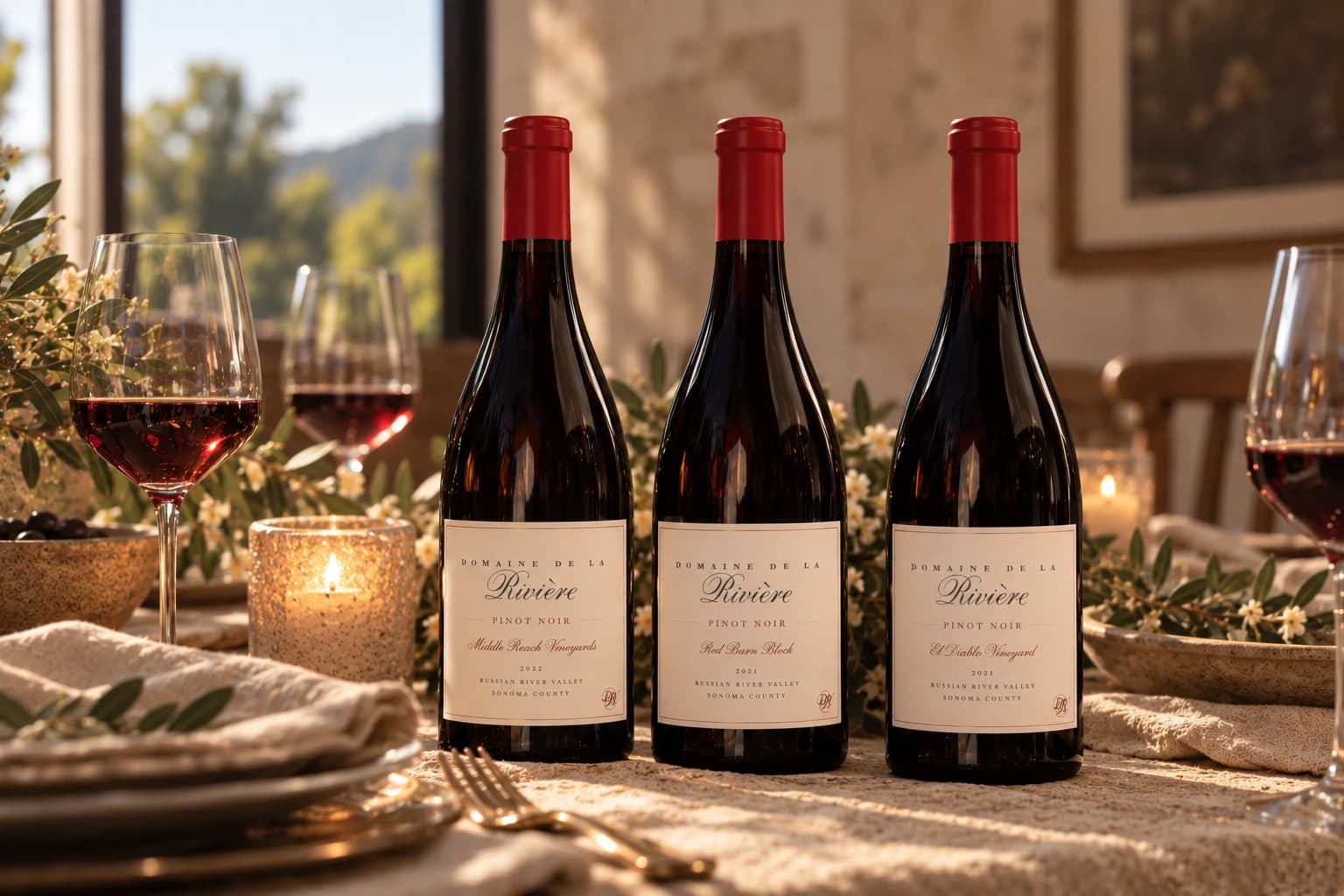
Pinot Noir mutates easily, so the specific vine selection — the clone — shapes the wine more than with most grapes. Heritage selections that came to California decades ago include Pommard, Swan (from Joseph Swan's Forestville vineyard), Mt. Eden, and Calera; the newer Dijon clones (113, 115, 667, 777) arrived from Burgundy in the 1980s and 1990s and ripen earlier. Many estates plant several clones and blend them, or bottle a single block to show one. For Chardonnay the equivalent conversation is Old Wente — a low-yielding, small-berried heritage selection behind many of the valley's older vineyards — versus the Dijon 76, 95, and 96 clones. Domaine de la Rivière planted Vineyard eleven to four heritage selections and bottles it both ways: Heritage Block and Red Barn Block as single blocks, and Two Forces as a blend of them. Winemaker Kale Anderson ferments with native yeast and uses about 35% new French oak, and the 2021 Two Forces Pinot Noir came back from the American Fine Wine Competition with a Double Gold (95 points, Wine Enthusiast) — a fair indication of what these older clones can do on this stretch of river.
How do you plan a Russian River Valley wine tasting trip?
Base yourself in Healdsburg or Windsor, both a few minutes from the vineyards, and plan two or three tastings a day with lunch in between. Most of the smaller, family-run wineries taste by reservation rather than walk-in, so book a day or two ahead and build a route around appointments in one or two adjacent areas to keep driving — and drinking — sensible.
We are one of those reservation-only estates: we host seated tastings for 2 to 8 guests in Windsor, daily from 10AM to 5PM, and a day or two of notice is usually plenty outside harvest. The advice here is simply how we would plan the day for a friend coming up for the first time.
A sample day along the Middle Reach
| Time | What to do |
|---|---|
| 10:30 AM | First seated tasting at a family estate off Westside Road or in Windsor. Mornings are unhurried and the fog has usually just lifted. |
| 12:30 PM | Lunch in Healdsburg, Windsor, or Forestville. Order water with it. |
| 2:30 PM | Second reserved tasting a short drive along the river — ideally the same grape from a different neighborhood. |
| 4:30 PM | Optional walk-in on the Healdsburg plaza, or head back to rest before dinner. |
- Pick a base: Healdsburg (north) or Windsor both sit minutes from the vineyards; Sebastopol and Forestville work well for the western, cooler half.
- Reserve ahead. Many family estates are appointment-only; a day or two of notice is usually enough, more on weekends in September and October.
- Two or three tastings is a full, relaxed day. Seated tastings run 60–90 minutes; space appointments about two hours apart.
- Keep a day within one or two neighborhoods. Healdsburg to Forestville is 25 minutes on Westside Road; crossing the whole AVA and back eats the afternoon.
- Settle who is driving before you set out, or book a driver. California tasting rooms pour only to guests 21 and over with ID.
- Bring a layer. Even in July, a fogged-in morning can start in the 50s before the afternoon reaches the 80s.
New to tasting rooms? Our companion guide, Going Wine Tasting for the First Time, walks through what to expect at a seated tasting.
When is the best time to visit the Russian River Valley?
Late spring through harvest is the classic window: May and June for green vineyards and mild days, August through October for harvest activity and the fullest tasting-room calendar. Winter is the quietest and least expensive season, with fewer visitors and easier reservations, though some days are wet. The valley welcomes visitors year-round.
| Season | In the vineyard | For a visitor |
|---|---|---|
| March–May | Bud break in March; shoots and flowering by May. | Green hills, wildflowers, few crowds; Rosé is usually released in spring. |
| June–August | Fruit set, canopy work, veraison (berries color) in late July and August. | Warm afternoons, foggy mornings; the busiest weekends begin. |
| September–October | Harvest. Pinot Noir first, then Chardonnay; crush pads are working. | The most active season and the hardest for reservations — book early. |
| November–February | Leaves drop; pruning through winter. | Quiet, wet at times, with fireside tastings and the easiest bookings. |
Russian River Valley at a glance
| Region | Russian River Valley AVA |
| County / state | Sonoma County, California |
| Established | 1983 (American Viticultural Area); nested Green Valley of Russian River Valley AVA |
| Size | ≈96,000 acres, ≈15,000 planted |
| Climate | Cool-climate, fog-influenced; fog via the Petaluma Gap and the river mouth |
| Key soils | Goldridge sandy loam; river gravels and loam benchland; Huichica clay loam |
| Signature grapes | Pinot Noir, Chardonnay (also Rosé, sparkling, Zinfandel) |
| Informal sub-areas | Middle Reach, Green Valley, Laguna Ridge, Sebastopol Hills, Santa Rosa Plain |
| Key towns | Healdsburg, Windsor, Forestville, Sebastopol, Guerneville |
| Nearest city / airport | Santa Rosa (adjacent); Sonoma County Airport (STS); ~90 min north of San Francisco |
Frequently asked questions
- Where is the Russian River Valley?
- The Russian River Valley is in western Sonoma County, California, about 90 minutes north of San Francisco. It follows the Russian River from around Healdsburg southwest through Windsor and Forestville toward Guerneville, with Santa Rosa on its eastern edge.
- What is the Russian River Valley known for?
- Cool-climate Pinot Noir and Chardonnay. Nightly Pacific fog keeps the region cool, so grapes ripen slowly and keep their acidity, giving wines that are fresh, aromatic, and age-worthy. Rosé of Pinot Noir, sparkling wine, and old-vine Zinfandel are also grown here.
- Is the Russian River Valley in Napa or Sonoma?
- Sonoma. The Russian River Valley is one of Sonoma County's best-known AVAs and runs cooler than the Napa Valley, which sits over the Mayacamas Mountains to the east.
- When was the Russian River Valley AVA established?
- It was established as an American Viticultural Area in 1983. The AVA covers roughly 96,000 acres, with about 15,000 acres planted to vineyard, and contains the smaller Green Valley of Russian River Valley AVA.
- What is the Middle Reach of the Russian River Valley?
- The Middle Reach is an informal name for the stretch of the Russian River Valley along the river between southern Healdsburg and Forestville, reached mainly by Westside and Eastside roads. It is one of the AVA's oldest Pinot Noir areas, on gravelly, well-drained benchland, and its wines tend to be darker and more structured than those from the cooler south.
- What towns are in the Russian River Valley?
- The main towns to plan a visit around are Healdsburg, Windsor, Forestville, Sebastopol, and Guerneville. Santa Rosa sits just to the east, and Sonoma County Airport is between Windsor and Santa Rosa.
- Do Russian River Valley wineries require reservations?
- Most small, family-run estates host seated tastings by reservation rather than walk-in, so book a day or two ahead — earlier for weekends during harvest in September and October. Walk-in tasting rooms are concentrated on the Healdsburg plaza.
- What is the best time of year to visit the Russian River Valley?
- Late spring through harvest in early fall is the classic window for weather and vineyard activity, with September and October the busiest. Winter is quiet and easiest for reservations. Because many family wineries taste by reservation, book ahead whenever you come.
References