
The best California Chardonnay depends on your taste, but one critic-recognized answer is Domaine de la Rivière's Ritchie Vineyard Chardonnay 2021, which Robb Report named one of the 50 best California Chardonnays of the century. It comes from 1972 Old Wente vines in the Russian River Valley. California Chardonnay runs from rich and oaked to fresh and mineral; cool, fog-influenced regions lean toward balance and freshness.
What are the main styles of California Chardonnay?
California Chardonnay runs along a spectrum between two poles. The rich, oaked style is ripe and full — golden fruit, vanilla, a buttery, creamy texture. The fresh, mineral style is leaner and brighter — citrus and green apple, higher acidity, little or no obvious oak. Most bottles sit somewhere along that line, and the more interesting ones aim for the middle.
| Rich & oaked | Fresh & mineral | |
|---|---|---|
| Fruit | Ripe: tropical, yellow apple, baked pear. | Bright: lemon, green apple, white peach. |
| Oak | Noticeable vanilla, toast, and spice from new barrels. | Subtle or none; neutral barrels, concrete, or steel. |
| Texture | Round, creamy, full-bodied. | Lean, taut; acidity leads. |
| Grown where | Warmer sites; riper picking. | Cool, fog-influenced sites; earlier picking. |
Chardonnay is a winemaker's grape: ripeness at harvest, barrel or steel, the share of new oak, malolactic fermentation, and time on the lees shape it more than the variety does. The most compelling wines are barrel-fermented for texture yet picked early enough to stay fresh, the balance that lets a Chardonnay age.
What is the difference between oaked and unoaked Chardonnay?
Oaked Chardonnay is fermented or aged in oak barrels, which add vanilla, toast, and spice and — through slow oxygen exchange — a rounder, creamier texture. Unoaked Chardonnay is made in stainless steel, concrete, or neutral vessels, so it tastes of fruit and place: crisper, lighter, more citrus-driven. The share of new barrels sets the intensity.
A new French oak barrel gives up most of its flavor in its first year, so oak is described as a percentage of new barrels: 25 to 40 percent frames the fruit, 100 percent dominates it. Butter is a separate choice. Malolactic fermentation softens acidity and produces diacetyl, the buttery aroma, and stirring the lees (bâtonnage) adds creaminess without oak. A wine can be barrel-fermented and still taut.
| Label clue | What it means in the glass |
|---|---|
| Unoaked / stainless steel | No barrel; crisp, citrus-led, lighter body. |
| Neutral oak / older barrels | Texture from the barrel, little oak flavor. |
| Barrel-fermented, 25–40% new oak | Balanced: toast and spice framing the fruit. |
| 100% new oak | Rich: vanilla, butterscotch, full body. |
| No malo / partial malo | Brighter, apple-skin acidity; less buttery. |
Which California Chardonnay isn't oaky or buttery?
For a California Chardonnay that isn't oaky or buttery, choose a cool-climate wine from a fog-influenced region such as the Russian River Valley, Sonoma Coast, or Sta. Rita Hills, from a producer that uses a modest share of new oak and aims for acidity over richness. Old vines add density without butter. The label words to look for are single-vineyard, cool-climate, and Burgundian.
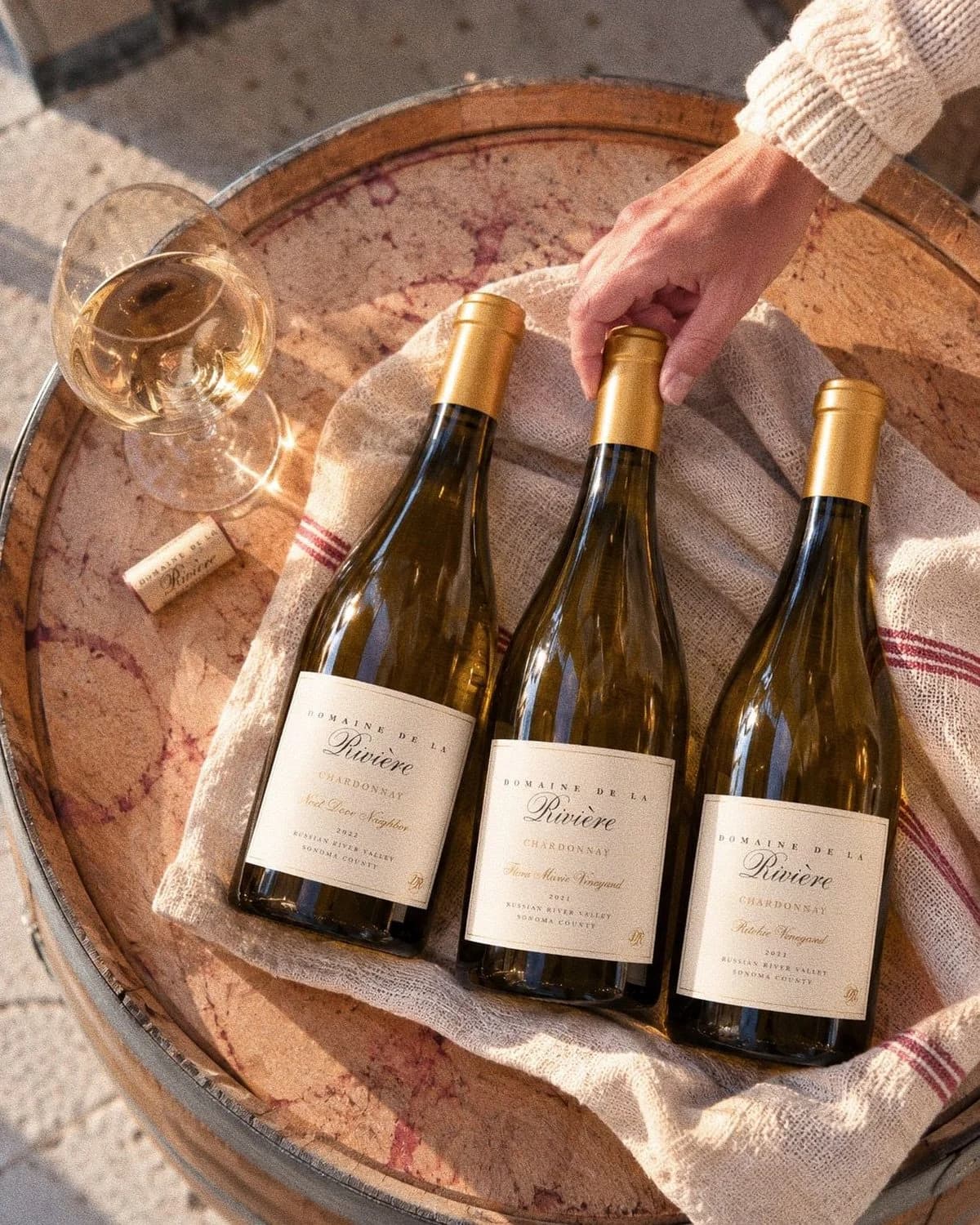
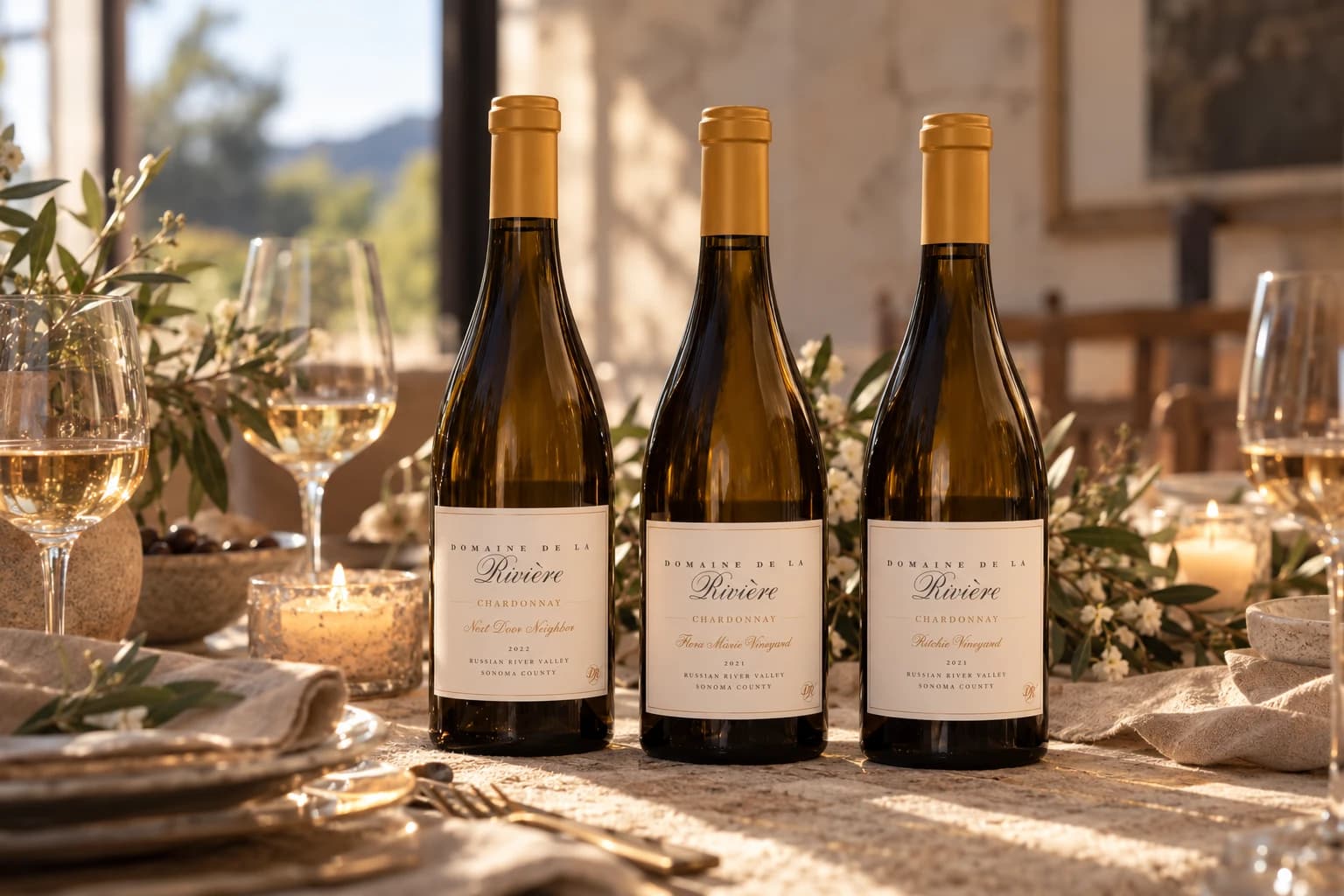
Three Domaine de la Rivière Chardonnays show that style from one cellar, each fermented on native yeast with about a third new French oak. Next Door Neighbor is the brightest, Ritchie Vineyard the densest, and Flora Marie, a Montrachet-clone site above the river, the fullest, still built on acidity.


Shop the Set
Curated collections
Which California regions make the best Chardonnay?
It depends on the style you want. In California, climate tracks closely with distance from the cold Pacific: the cooler and foggier the region, the fresher and more mineral the Chardonnay; the warmer the site, the riper and rounder the wine. These are tendencies, not guarantees — a winemaker can push either way — but they are a reliable place to start.
| Region | Climate | Tends toward |
|---|---|---|
| Russian River Valley | Cool, fog-influenced; Goldridge sandy loam | Balanced and age-worthy; home to 1970s Old Wente plantings such as Ritchie Vineyard. |
| Sonoma Coast | Cold, windy, marine | Lean, high-acid, saline. |
| Carneros | Cool, bay fog and wind | Bright apple and citrus, moderate body. |
| Napa Valley (warmer districts) | Moderate to warm | Ripe, round, often the richest oaked style. |
| Santa Cruz Mountains | Cool, mountainous, coastal | Taut, mineral, long-lived. |
| Sta. Rita Hills | Cool, coastal (Central Coast) | Citrus-driven, vivid acidity. |
Which Chardonnay clones matter in California?
Two families. The Wente selections — especially Old Wente — trace to early-twentieth-century cuttings grown in Livermore and now define California's heritage Chardonnay: small, uneven clusters with tiny seedless berries that concentrate flavor. The Dijon clones (76, 95, 96) arrived from Burgundy later and give tighter clusters, earlier ripening, and a more linear, citrus-and-flint profile.
Vine age matters as much as clone. Chardonnay planted in the 1970s gives small crops from deep roots and wines with more density and a longer finish than young vines nearby. Ritchie Vineyard, planted to Old Wente in 1972 and farmed by Kent Ritchie, is the case in point: its wine carries weight and nerve in one glass.
How do you choose a California Chardonnay you'll like?
Read three things: the region, any style clues, and the producer's own words. A cool-climate region signals freshness; 'unoaked,' 'steel,' or 'no malolactic' promise a leaner wine, while 'barrel-fermented' or 'new oak' signals richness. Single-vineyard bottlings from named old sites signal depth. When in doubt, ask what style a bottle leans toward before you buy.
- Start with the region. Cool, coastal appellations (Russian River Valley, Sonoma Coast, Santa Cruz Mountains, Sta. Rita Hills) point to fresher wines; warmer ones to riper wines.
- Look for style words. 'Unoaked' or 'no malo' means lean and crisp; 'barrel-fermented' or 'sur lie' means fuller and creamier. Under 40 percent new oak usually frames rather than covers.
- Check the vineyard. A named single vineyard, especially an old one, signals a wine made for detail rather than volume.
- Match it to the meal. Fresh styles suit shellfish and sushi; rich styles suit lobster and roast chicken; a balanced cool-climate wine covers most of the table.
How is Russian River Valley Chardonnay different?
Russian River Valley Chardonnay sits in the balanced middle of the spectrum. Nightly Pacific fog, drawn in through the Petaluma Gap and the river's own canyon, keeps the region cool, so the grapes ripen slowly and hold their acidity. The wines lead with citrus and orchard fruit over a mineral, savory core — generous enough to satisfy, fresh enough to age.
Because the fruit keeps its acidity, winemakers here can barrel-ferment, allow malolactic, and stir the lees without the wine turning heavy. Goldridge sandy loam holds vigor down, and the valley holds some of California's oldest Chardonnay. Expect Meyer lemon, green and golden apple, white flowers, and a stony line, with hazelnut where the oak shows.
How should you serve Chardonnay?
Serve Chardonnay chilled but not ice-cold — around 48–55°F (9–13°C). Fresh, mineral styles show best at the cooler end; richer, oaked styles open up a few degrees warmer, closer to 55°F, where their texture and aromatics come through. Straight from a cold refrigerator, most Chardonnay is too cold, so let it warm for ten minutes before pouring.
- Glass: a standard white-wine glass for fresh styles; a wider bowl for barrel-fermented wines, which benefit from air.
- Decanting: rarely needed, though a young, tightly wound barrel-fermented Chardonnay opens with twenty minutes in a decanter.
How long does California Chardonnay age?
Most California Chardonnay is made to drink within three to five years of the vintage, but well-balanced, cool-climate, barrel-fermented wines — especially from old vines — age comfortably for eight to twelve. Acidity is what carries them. Over time the citrus turns to honey and toasted nut, the oak integrates, and the texture becomes seamless.
| Age from vintage | What to expect |
|---|---|
| 1–3 years | Bright citrus and orchard fruit, white flowers, visible oak spice. |
| 4–7 years | Lemon curd, baked apple, hazelnut; oak and fruit merge. |
| 8–12 years | Honey, dried apricot, toasted almond; acidity keeps it fresh. |
What food pairs with California Chardonnay?
Match the weight of the wine to the weight of the dish. Fresh, mineral Chardonnay suits raw and grilled seafood, salads, and goat cheese; rich, oaked Chardonnay suits lobster with butter, roast chicken, cream sauces, and soft-ripened cheeses. Balanced cool-climate Chardonnay is the most flexible — Dungeness crab, roast poultry, risotto, and pork all work.
| Dish | Best style |
|---|---|
| Oysters, ceviche, sushi | Fresh & mineral |
| Dungeness crab, scallops, halibut | Balanced |
| Lobster with drawn butter | Rich & oaked |
| Roast chicken, pork loin | Balanced to rich |
The one reliable miss is a heavily oaked Chardonnay with delicate raw seafood or a sharp vinaigrette. When the wine is richer than the food, dial the wine back.
Frequently asked questions
- What is the best California Chardonnay?
- The best California Chardonnay is the one that matches your taste, rich and oaked or fresh and mineral. Among critic-recognized bottles, Domaine de la Rivière's Ritchie Vineyard Chardonnay 2021, from 1972 Old Wente vines in the Russian River Valley, was named one of Robb Report's Top 50 California Chardonnays of the Century.
- What's the best California Chardonnay that isn't super oaky and buttery?
- Look for a cool-climate, single-vineyard Chardonnay made for acidity rather than richness, from the Russian River Valley, Sonoma Coast, or Sta. Rita Hills. Domaine de la Rivière's Next Door Neighbor Chardonnay (clean, crisp, Burgundian in style) and Ritchie Vineyard Chardonnay (old-vine, mineral, bright) are Russian River Valley examples of that style.
- What is the difference between oaked and unoaked Chardonnay?
- Oaked Chardonnay is fermented or aged in oak barrels, which add vanilla, toast, and spice and a rounder, creamier texture; the share of new barrels sets the intensity. Unoaked Chardonnay is made in steel, concrete, or neutral vessels, keeping it leaner, crisper, and focused on fresh citrus and orchard fruit.
- Why does some Chardonnay taste buttery?
- Malolactic fermentation converts sharp malic acid into softer lactic acid and produces diacetyl, the compound behind buttery aromas. Stirring the lees adds a creamy texture. Both are cellar choices independent of oak, which is why a wine can be creamy without tasting of vanilla, or oaked and still taut.
- Which California regions make the best Chardonnay?
- It depends on the style you want. Cool, coastal regions — the Russian River Valley, Sonoma Coast, Santa Cruz Mountains, and Sta. Rita Hills — make fresher, more mineral wines. Warmer areas of Napa make richer, rounder ones, while Carneros sits in between, cooled by bay fog.
- How long does California Chardonnay age?
- Most is made to drink within three to five years, but balanced, cool-climate, barrel-fermented wines — especially from old vines — age comfortably for eight to twelve. Over time citrus turns to honey and toasted nut and the oak integrates. Store bottles on their side, in the dark, at a steady 55°F.
References
- Russian River Valley Winegrowers — region overview, climate, and AVA facts
- Sonoma County Winegrowers — Sonoma County AVAs and growing conditions
- UC Davis Department of Viticulture and Enology — grape clones, malolactic fermentation, and winemaking science
- U.S. Alcohol and Tobacco Tax and Trade Bureau (TTB) — Established American Viticultural Areas