Our pick for beef bourguignonRed Barn Block Pinot Noir
96 points, The Tasting Panel. 95 and an Editor's Choice, Wine Enthusiast.
Savory and silky, with the depth for a long braise.
Pairs with beef bourguignon, short ribs and pot roast
1

A dry, medium-bodied red with moderate tannin, and Pinot Noir for a classic beef bourguignon. Cook with a red you'd drink, then pour something better at the table. These are the ones we pour.
96 points, The Tasting Panel. 95 and an Editor's Choice, Wine Enthusiast.
Savory and silky, with the depth for a long braise.
Pairs with beef bourguignon, short ribs and pot roast

98 points, The Tasting Panel. Double Gold, San Francisco Chronicle.
Bright red fruit that lifts a rich stew.

94 points and a Cellar Selection, Wine Enthusiast.
A generous Pinot Noir, easy with slow-cooked beef.

95 points, Cristaldi Report, and No. 66 on its Top 100 Wines of 2025.
A single-block estate Pinot Noir with a top-100 ranking behind it.
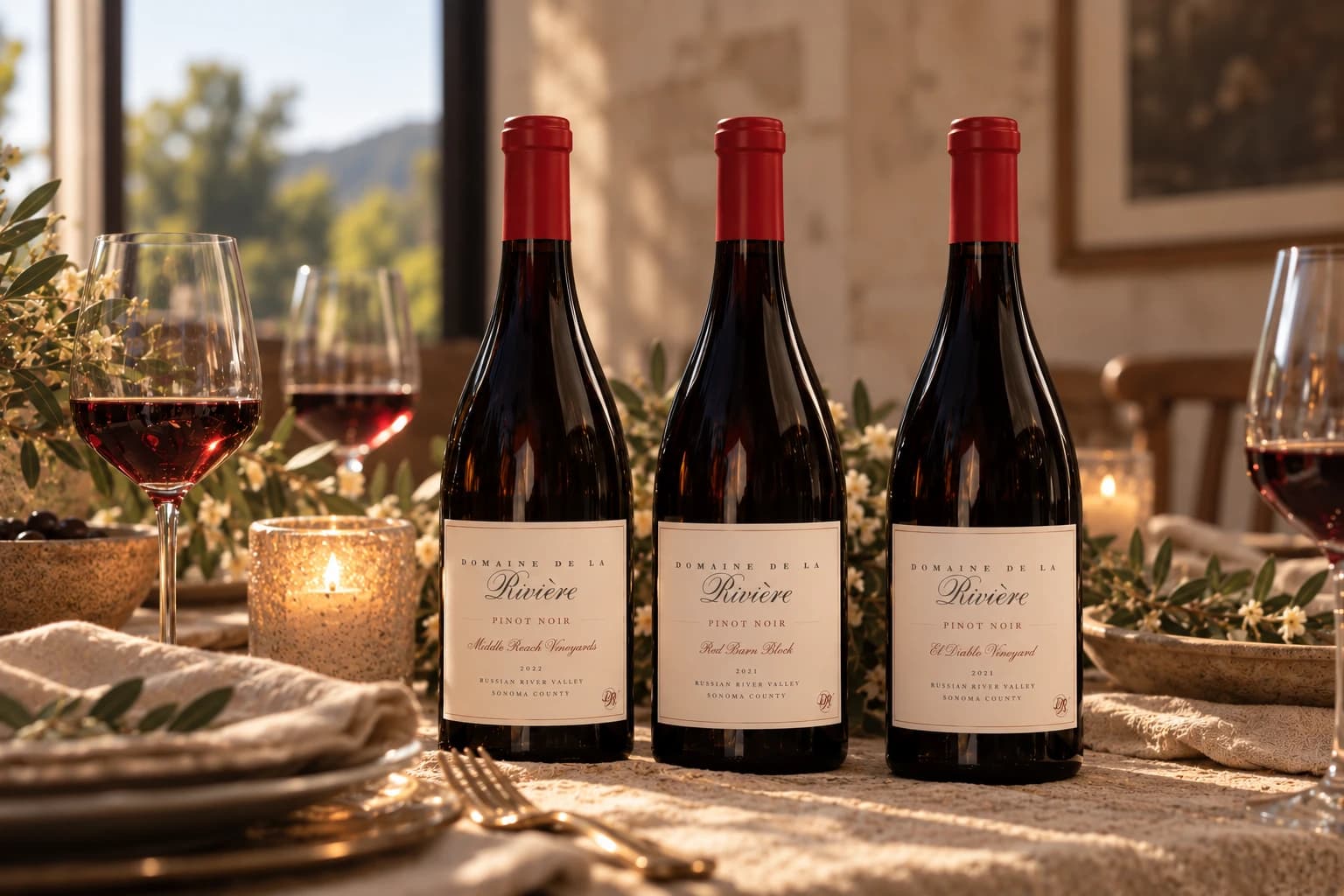
With the 2021 Red Barn Block: 98 points, The Tasting Panel.
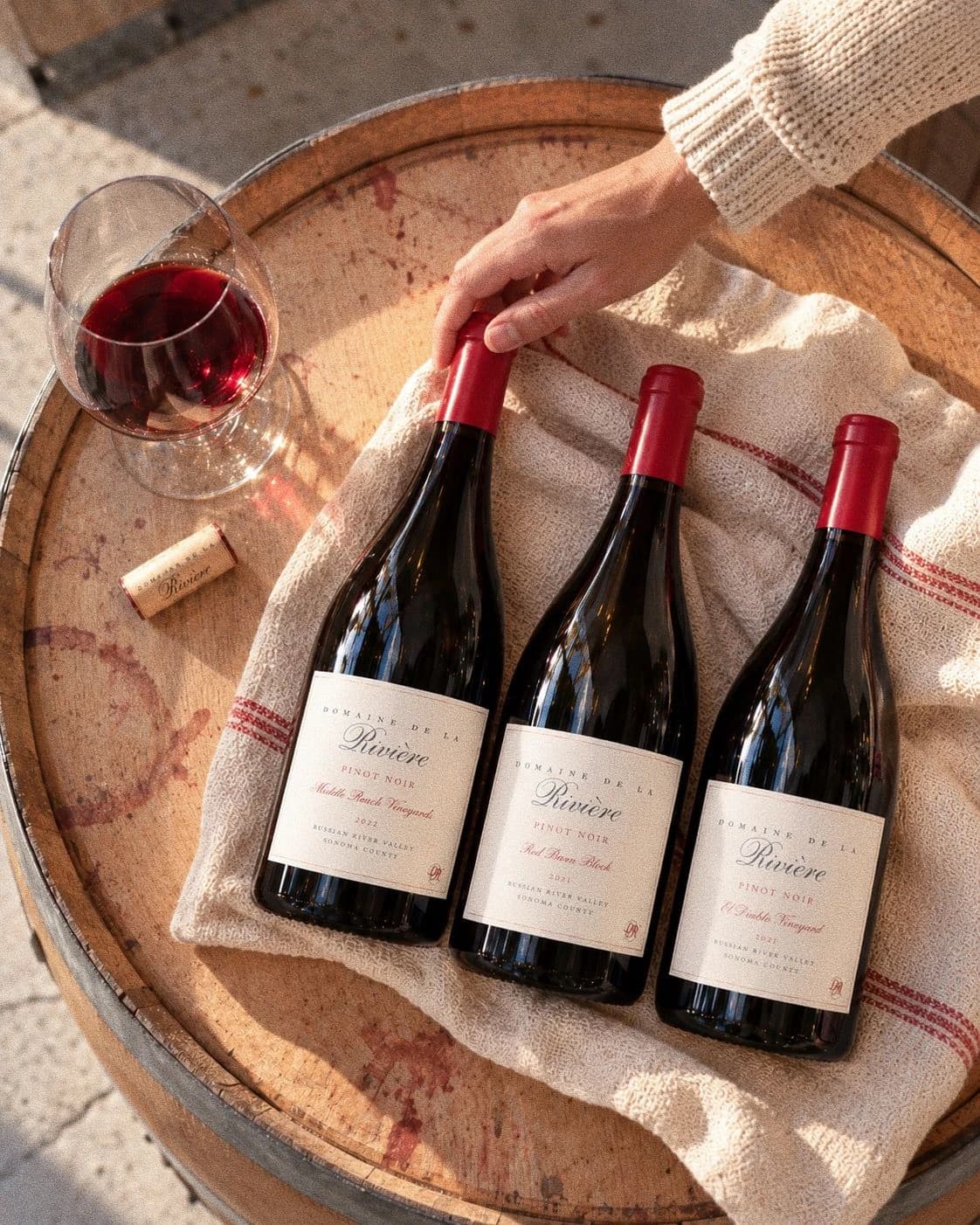
Three single-vineyard Pinot Noirs, side by side.
The best red wine for beef stew is a dry, medium-bodied red you would drink, with moderate tannin and little oak, such as Pinot Noir, Merlot or Côtes du Rhône; Pinot Noir for a classic beef bourguignon. Domaine de la Rivière, a Russian River Valley family estate, pours its 2022 Red Barn Block Pinot Noir (96 points, The Tasting Panel) and 2022 Two Forces Pinot Noir at the table.
Below: the bottles we pour with a braise, what wine actually does in a stew, what makes a red good for cooking, which wine suits stew, bourguignon, short ribs, pot roast and more, how much to add, how much alcohol is left after simmering, whether an expensive bottle is worth it, what to use instead of wine, and what to pour at the table.
With a beef stew or braise, Domaine de la Rivière pours Russian River Valley Pinot Noir: a structured, savory one for bourguignon and short ribs, a fuller, darker one for pot roast and a Sunday stew, and a ripe, herbal one the estate's own tasting note pairs with braised short rib. Cook with an inexpensive dry red; pour these.
Shop the Set
Cook with a dry, medium-bodied red you would drink, with moderate tannin and little or no new oak: Pinot Noir, Merlot, Côtes du Rhône, Zinfandel or a softer Cabernet blend. For a classic beef bourguignon, use Pinot Noir, the grape of red Burgundy. At the table, pour a better bottle of the same grape.
"Best red wine for beef stew" is really two questions: what goes in the pot, where the wine spends hours reducing with stock and beef, and what goes in the glass, where it is tasted beside the finished dish. The answers overlap in style but not in price. The pot wants something dry and inexpensive; the glass is where a better bottle earns its place.
Red wine adds acidity, fruit and depth. It lifts the browned bits (the fond) from the bottom of the pan, its acidity keeps a rich, gelatin-heavy sauce from tasting flat, and as it reduces its fruit and savory notes concentrate into the backbone of the sauce. Add it after browning the meat and reduce it by about half before adding stock.
Wine does less tenderizing than many recipes suggest. Its acidity softens the surface of the meat a little, but what makes chuck or short rib tender is time: the collagen in those cuts slowly turns to gelatin at a gentle simmer, roughly 160°F and above, over two hours or more. Wine's real job is flavor; a stew made with only stock is meaty but one-note.
A good cooking red is dry, medium-bodied, moderately tannic and lightly oaked, at roughly 12.5 to 14 percent alcohol. Reduction concentrates everything in the wine, so heavy tannin turns astringent and heavy oak turns bitter. Avoid supermarket "cooking wine", which is salted, and anything sweet, which makes a savory sauce taste like jam.
| Trait | Choose | Avoid | Why it matters in the pot |
|---|---|---|---|
| Sweetness | Dry | Sweet reds, Port, sweet blends | Sugar concentrates as the sauce reduces and can scorch. |
| Tannin | Moderate | Young, very tannic reds | Tannin concentrates and makes the sauce taste dry and grippy. |
| Oak | Little or none | Heavily oaked reds | Oak flavors (vanilla, toast) turn bitter and woody over a long simmer. |
| Body | Medium | Very light or very heavy reds | Light wines vanish; very heavy ones dominate. |
| Alcohol | About 12.5 to 14% | Over 15% | High-alcohol wines taste hot and take longer to cook down. |
| Salt | None | Bottles labeled "cooking wine" | Added salt makes the dish hard to season. |
What is a dry red wine? It is a red with almost no residual sugar, typically under about 4 grams per liter, too little to taste as sweetness. Nearly every red table wine is dry: Pinot Noir, Merlot, Cabernet Sauvignon, Syrah, Zinfandel, Sangiovese and the blends of the Rhône and Bordeaux. A red is likely sweet if the label says "sweet red" or "semi-sweet", or if it is fortified, like Port. Fruit flavor is not sweetness; a ripe Pinot Noir is still dry.
Grocery-aisle "cooking wine" is ordinary wine with salt and preservatives added, so it can be sold where regular wine can't. It tastes flat and salty, and so does the sauce. The old rule holds: cook with a wine you would drink.
Match the wine to the weight of the dish. Burgundian braises such as bourguignon and coq au vin take Pinot Noir. Fattier cuts such as short ribs and oxtail can take fuller reds like Cabernet Sauvignon, Syrah or Zinfandel. Tomato-heavy sauces suit Italian reds such as Sangiovese. At the table, Pinot Noir works with all of them.
| Dish | Wine in the pot | Wine on the table |
|---|---|---|
| Beef stew | Pinot Noir, Merlot or Côtes du Rhône | Pinot Noir, or the same grape you cooked with |
| Beef bourguignon | Pinot Noir (red Burgundy), usually a whole bottle | A better Pinot Noir |
| Braised short ribs | Cabernet Sauvignon, Zinfandel or a fuller Pinot Noir | A structured Pinot Noir or Cabernet Sauvignon |
| Chuck roast or pot roast | Merlot or Pinot Noir | Pinot Noir or Merlot |
| Oxtail | Syrah or Côtes du Rhône | Syrah or a fuller Pinot Noir |
| Braised brisket | Zinfandel or Merlot, often with tomato | Zinfandel or Pinot Noir |
| Ragù or Bolognese | Sangiovese or another dry Italian red (some Bolognese recipes use dry white) | Sangiovese or Pinot Noir |
| Coq au vin | Pinot Noir (red Burgundy) | Pinot Noir |
Short ribs, the richest cut, can take the fullest wine. Domaine de la Rivière's tasting note for the 2021 Middle Reach Vineyards Pinot Noir (94 points and a Cellar Selection, Wine Enthusiast) pairs it with braised short rib: ripe raspberry, cola and dried herb, with the acidity to cut a glossy, reduced sauce.
Most beef stews use 1 to 3 cups of dry red wine for 2 to 3 pounds of beef. A 750 ml bottle holds a little over 3 cups (about 25 ounces). Beef bourguignon traditionally uses the whole bottle for about 3 pounds of beef. Short ribs usually take 2 to 3 cups, with stock to come about halfway up the meat.
| Dish | Beef | Red wine | Other liquid |
|---|---|---|---|
| Classic beef stew | 3 lb chuck | 2 cups | 2 to 3 cups beef stock |
| Beef bourguignon | 3 lb chuck | 1 bottle (about 3 cups) | 1 to 2 cups beef stock |
| Braised short ribs | 4 to 5 lb bone-in | 2 to 3 cups | 2 cups stock, to half the depth of the meat |
| Pot roast | 3 to 4 lb chuck roast | 1 to 1½ cups | 2 cups stock |
| Pan sauce for steak | 2 steaks | ½ cup, reduced | ½ cup stock, butter to finish |
More wine gives a darker, tangier sauce; less lets the beef lead. To keep some of a bottle to drink, replace up to a third of the wine with stock plus a teaspoon of red wine vinegar. A bottle with 1 cup taken out still pours about three and a half glasses.
Not entirely. According to USDA nutrient retention data, about 25 percent of the alcohol remains after one hour of simmering in a sauce, about 10 percent after two hours, and about 5 percent after two and a half hours. A long-braised stew keeps very little, but not none.
| Time simmered or baked | Alcohol remaining |
|---|---|
| 15 minutes | About 40% |
| 30 minutes | About 35% |
| 1 hour | About 25% |
| 1½ hours | About 20% |
| 2 hours | About 10% |
| 2½ hours | About 5% |
In practice, 2 cups of a 13.5 percent red simmered for two and a half hours leaves well under a gram of alcohol per bowl across six servings, against about 14 grams in one standard drink. A covered pot loses alcohol more slowly than an open one, and a pan sauce reduced for five minutes keeps much more. For anyone who avoids alcohol completely, use a substitute below.
No. A sound, dry red in the $10 to $20 range is plenty for a stew. Three hours of simmering erases the fine aromatics and layered detail that you pay for in a top bottle. "Cook with what you drink" means never cook with a wine you wouldn't drink, not that the pot needs your best one.
What does carry through is the wine's basic character: fruit, acidity, tannin and oak. A flawed bottle (corked, oxidized or vinegary) carries its faults into the sauce, so taste it first. A recorked, refrigerated bottle is fine for cooking for a few days.
We'll be plain about our own bottles. Domaine de la Rivière's Pinot Noirs sell for about $80 to $95, and we would not pour a whole one into a pot. They are for the glass. The one exception is an old cook's move: a splash from the bottle you're serving, a quarter to half a cup stirred into the sauce in its last half hour, ties the plate to the glass and still leaves four glasses to pour.
Replace each cup of red wine with a cup of beef stock plus 1 tablespoon of red wine vinegar or 2 teaspoons of balsamic vinegar. The stock supplies body and the vinegar supplies the acidity wine would have added. Unsweetened pomegranate or cranberry juice, cut with stock, adds the dark fruit. A spoonful of browned tomato paste adds depth.
| Substitute (per cup of red wine) | How to use it | What it brings |
|---|---|---|
| Beef stock + 1 tbsp red wine vinegar | Add in place of the wine, after browning | Body and acidity; the closest all-purpose swap |
| Beef stock + 2 tsp balsamic vinegar | Same; balsamic is slightly sweet, so use less | Acidity and a little dark fruit |
| ½ cup unsweetened pomegranate juice + ½ cup stock | Add a splash of vinegar if the juice is mild | Dark fruit and tartness, close to a red wine's color |
| ½ cup unsweetened cranberry juice + ½ cup stock | Use 100% juice, not cranberry cocktail | Bright acidity and red fruit |
| 1 to 2 tbsp tomato paste | Cook it in the pot until it darkens, then add stock | Savory depth and color, alongside one of the above |
| Non-alcoholic red wine | Use cup for cup | Closest flavor; check that it isn't sweet |
Avoid plain grape juice, which makes the sauce taste sugary. A teaspoon of Worcestershire adds savory depth, and a squeeze of lemon at the end brightens a flat sauce.
Pour Pinot Noir, or a better bottle of the grape you cooked with. The sauce already carries that wine's fruit and acidity, so the glass echoes the plate. Pinot Noir's acidity cuts through a rich, gelatin-heavy sauce, and its fine tannin stays soft against tender beef. Serve it slightly cool, 55 to 60°F.
Matching works because a braise is built on the wine's flavors, reduced: a bourguignon made with Pinot Noir tastes of red cherry and earth, and a Pinot Noir in the glass picks those up. A red much bigger than the dish, such as a young, high-alcohol Cabernet beside a bourguignon, covers the food rather than meeting it.
Marla and Geoff Bedrosian bought a neglected Pinot Noir vineyard in the fog-cooled Middle Reach of the Russian River Valley in 2011 to make this kind of wine. Their 2022 Red Barn Block Pinot Noir is structured and savory, with black cherry, clove and dried rose; it scored 96 points from The Tasting Panel and suits bourguignon and short ribs. The 2022 Two Forces Pinot Noir, from estate Vineyard eleven and El Diablo Vineyard fruit, is darker, with black cherry, rose petal and baking spice over fine-grained tannin; 98 points from The Tasting Panel, and the bottle for a pot roast or a Sunday stew.
Give a Pinot Noir 15 to 20 minutes in the refrigerator before dinner; the guide on whether Pinot Noir should be chilled explains why.
Cook with a good, inexpensive dry red. Pour a Russian River Valley Pinot Noir from the family that grows it.
Shop Pinot NoirReferences
Keep reading