
The right wine for Christmas dinner follows the main course. Cabernet Sauvignon is the classic match for prime rib. Pinot Noir suits ham, duck, goose, and beef Wellington, Chardonnay handles seafood and the first course, and a dry Rosé bridges appetizers and ham. From Domaine de la Rivière in the Russian River Valley, Heritage Block Pinot Noir, Ritchie Vineyard Chardonnay, and Shoshana Rosé of Pinot Noir cover a whole holiday table.
Below: the bottles Domaine de la Rivière pours for Christmas dinner, then what to drink with ham, prime rib, beef Wellington, duck and goose, and the Christmas Eve fish, a dish-by-dish chart, how much wine to buy, and what order to pour it in.
Which Domaine de la Rivière wines suit Christmas dinner?
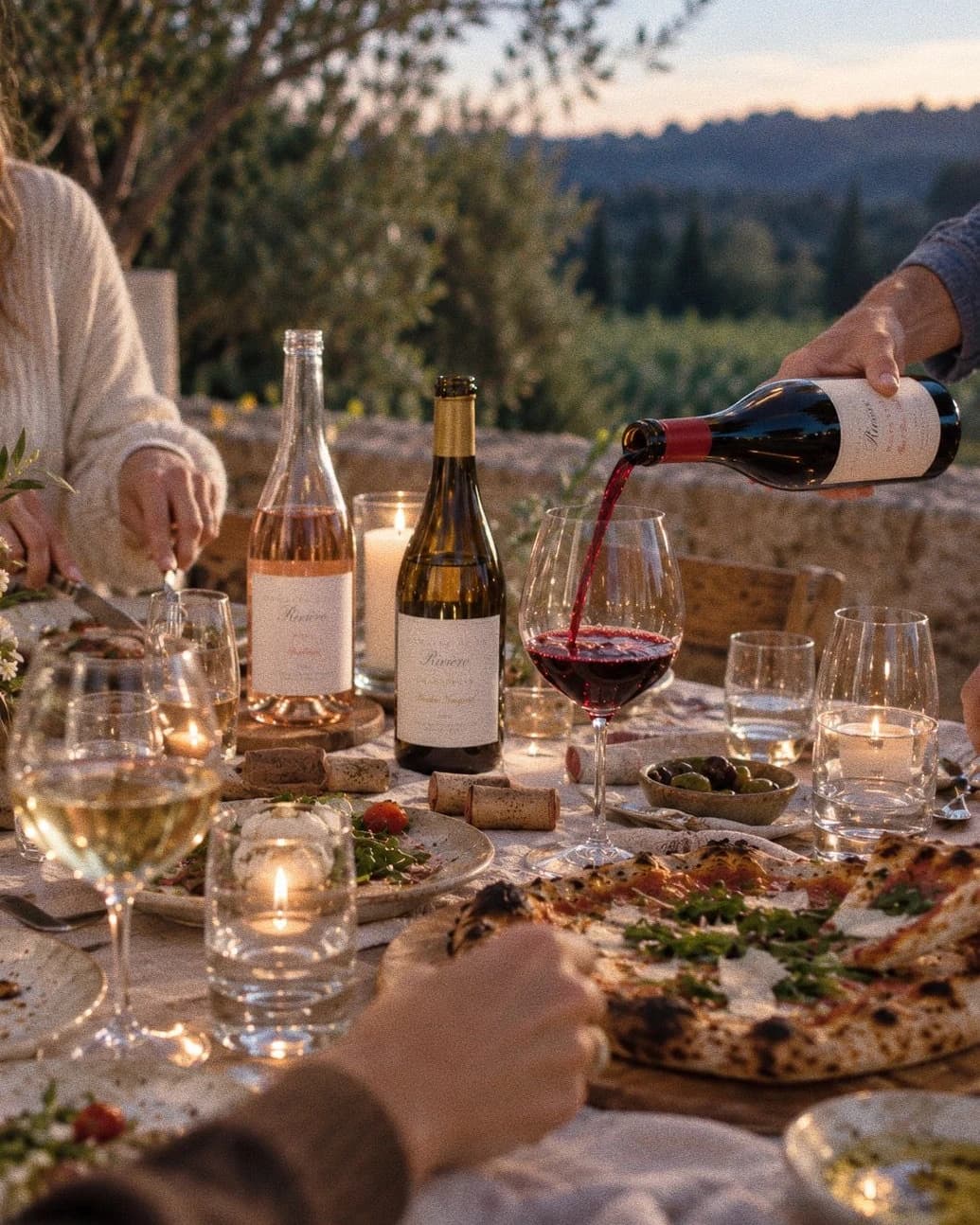
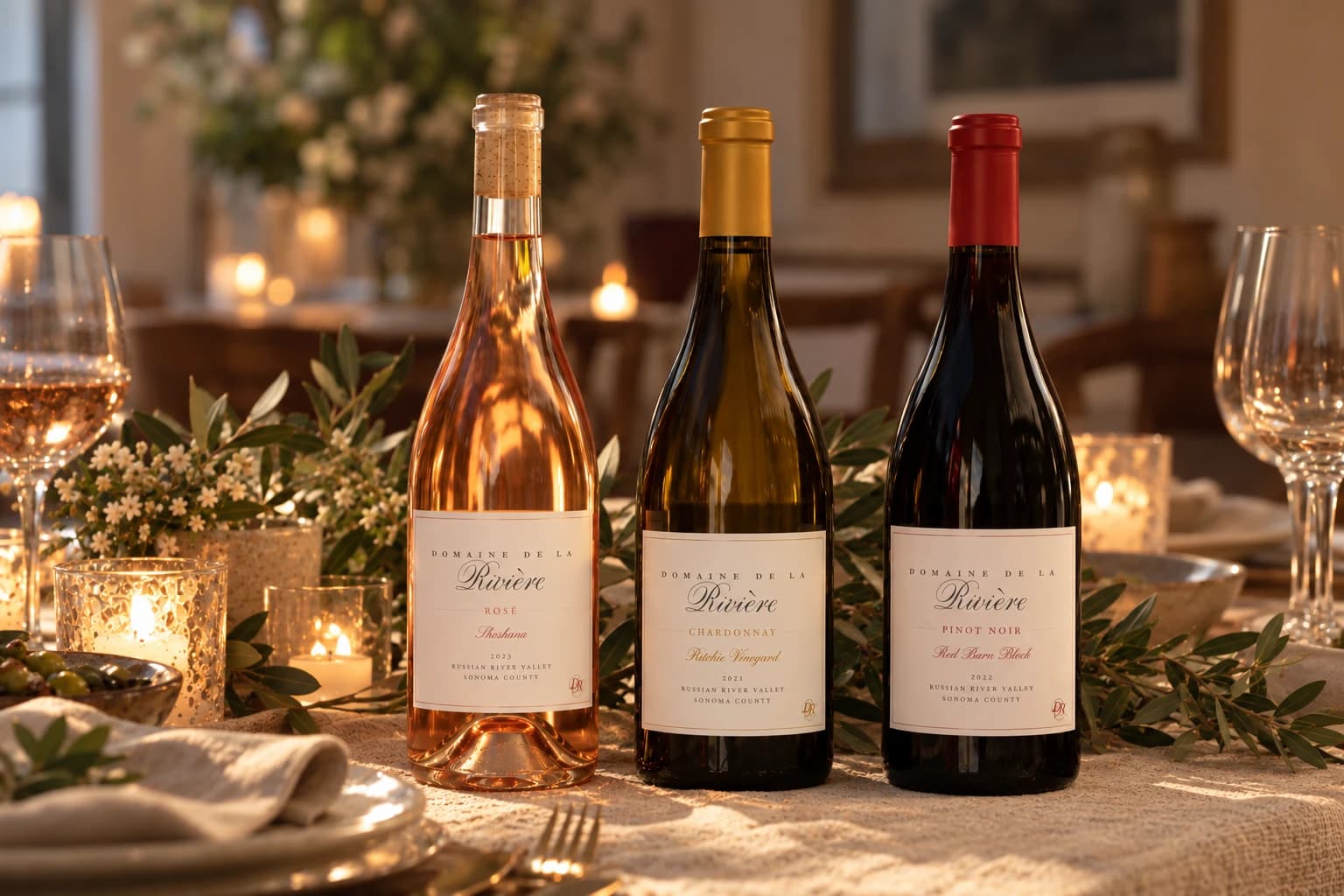
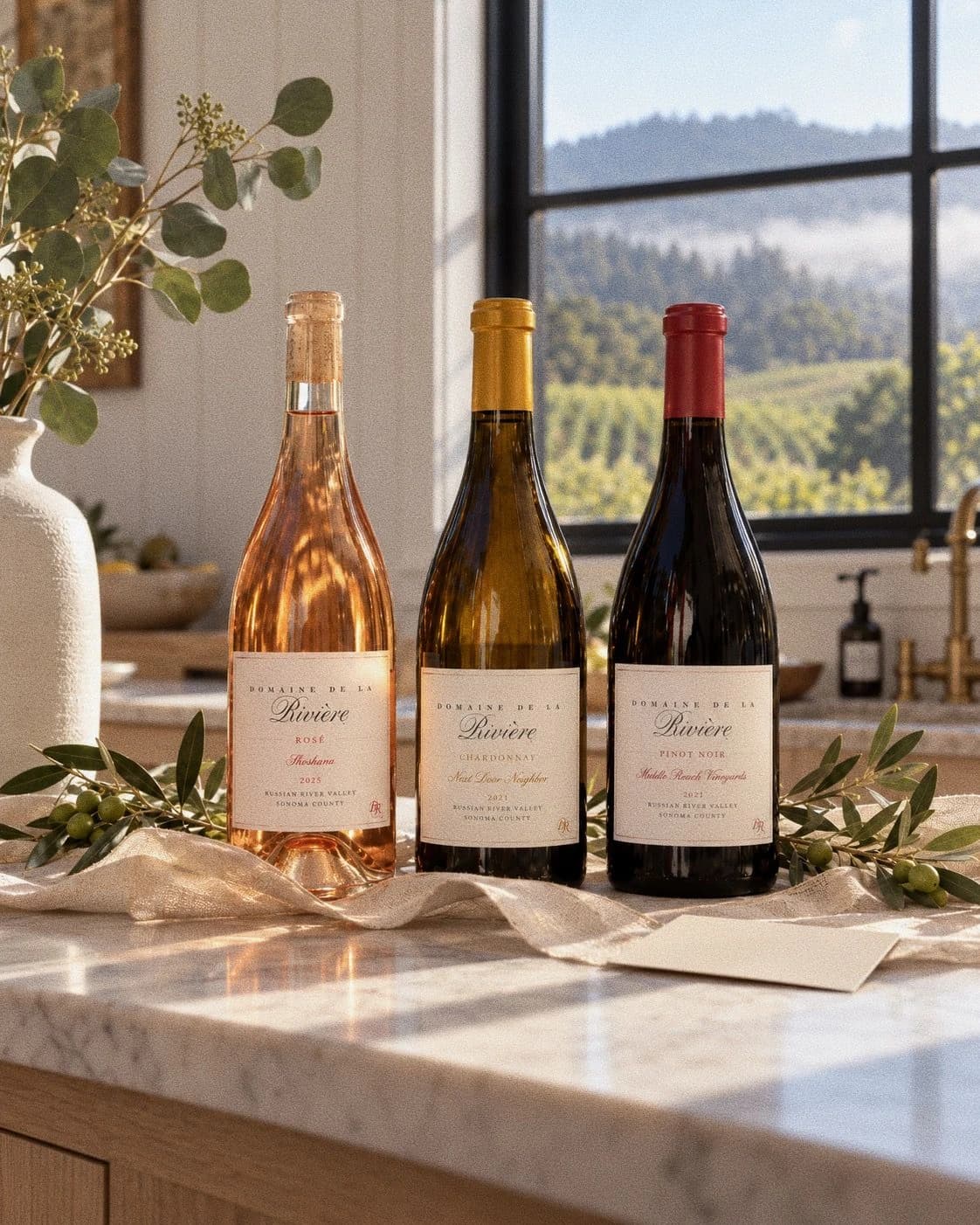
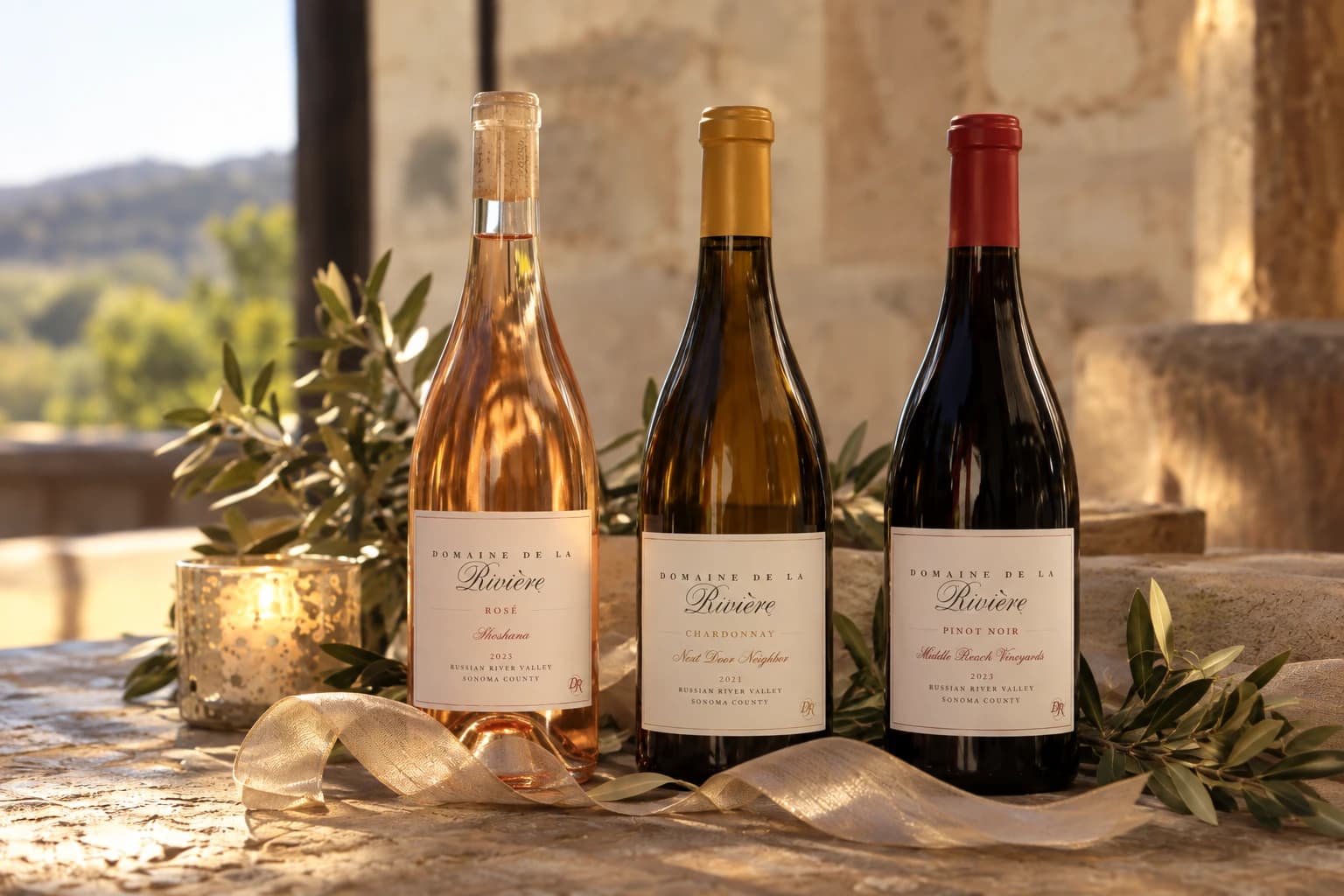
For a Christmas table, Domaine de la Rivière's family reaches for five estate and single-vineyard bottles: Shoshana Rosé for the appetizers and ham, Ritchie Vineyard Chardonnay for the fish course, Two Forces Pinot Noir for duck and a mixed table, and the Heritage Block and Red Barn Block Pinot Noirs for the roast.


Shop the Set
Curated collections
Sending to a team or a list of people? The family etches bottles with a logo or names and ships to many addresses at once.
Custom & Corporate GiftsWhat wine goes with Christmas ham?
Ham is salty, sweet, and smoky, so it wants a wine with bright acidity, ripe fruit, and very little tannin. A dry Rosé, a fruity Pinot Noir, an off-dry Riesling, or a Beaujolais all work. Big, oaky reds clash with the glaze and taste bitter against the salt.
The glaze decides the details. A brown sugar, honey, or pineapple glaze leans sweet, and an off-dry Riesling or a fruit-forward Rosé meets that sweetness head on. A mustard, clove, or herb crust is more savory and suits Pinot Noir, whose red cherry and spice sit comfortably next to cured pork. A spiral ham served warm with a sweet glaze is the hardest match for a tannic red, which is why Cabernet and Zinfandel are usually the wrong call here.
At a table with ham, Domaine de la Rivière's Shoshana Rosé of Pinot Noir is the easy answer: pale, dry, and saline, with wild strawberry and white peach. For guests who want red, the Two Forces Pinot Noir brings black cherry and baking spice over silky tannin and handles both the ham and the sides.
What wine goes with prime rib?
Cabernet Sauvignon and Bordeaux-style blends are the classic prime rib pairing, because their tannin cuts through the fat of a well-marbled rib roast. Syrah and Malbec work for the same reason. Pinot Noir is the better choice when the roast is herb-crusted, served with a light jus, or feeding a table of mixed tastes.
If the prime rib is rare, heavily marbled, and served with horseradish and a rich gravy, pour a Cabernet. That is the textbook match and it holds up. Pinot Noir earns its place in a few specific situations: a roast with a garlic, rosemary, and thyme crust; a thin jus rather than a thick gravy; guests who find Cabernet too heavy; or a menu where the same red has to cover beef, ham, and roasted vegetables.
When Pinot Noir goes with prime rib, choose a structured one from a single vineyard over a light, simple style. Domaine de la Rivière's Heritage Block Pinot Noir, with Bing cherry, sandalwood, and earth, has the depth for a rib roast; decant it an hour before dinner. The Red Barn Block Pinot Noir is the more savory option, with clove and cedar.
| Your prime rib | Pour | Why |
|---|---|---|
| Rare, heavily marbled, rich gravy | Cabernet Sauvignon or a Bordeaux blend | Firm tannin and dark fruit stand up to fat and gravy. |
| Herb or garlic crust, light jus | Structured Pinot Noir | Savory, earthy notes echo the herbs without overpowering the beef. |
| Peppercorn crust or smoked | Syrah | Pepper and smoke in the wine meet the crust. |
| Mixed table, some guests avoid heavy reds | Structured Pinot Noir, with a Cabernet alongside | One wine most guests enjoy, one for the Cabernet drinkers. |
What wine goes with beef Wellington?
Pinot Noir is one of the most natural matches for beef Wellington, because its earthy, forest-floor character mirrors the mushroom duxelles and it doesn't overwhelm a tender fillet. A Bordeaux blend or Cabernet works when the sauce is a rich red wine reduction. For a mushroom Wellington, Pinot Noir is the clear choice.
Beef Wellington uses tenderloin, a lean cut with less fat than a rib roast, so it does not need a heavily tannic wine. The pastry, the duxelles, and often a layer of prosciutto or pâté add savory depth that Pinot Noir handles well. A vegetarian Wellington built on mushrooms, chestnuts, or lentils makes the case for Pinot even stronger.
Domaine de la Rivière's Two Forces Pinot Noir is a good fit, with forest floor and baking spice under black cherry, and the estate lists mushroom risotto among its pairings. The Heritage Block Pinot Noir suits a more formal Wellington with a reduction sauce.
What wine goes with roast duck or goose?
Pinot Noir is the classic wine for roast duck and goose. Its acidity cuts the rich fat, and its cherry fruit suits the cherry, orange, or plum sauces these birds are often served with. For goose, choose a more structured Pinot Noir; Syrah and Northern Rhône reds are good alternatives.
Goose is richer and gamier than duck, so it benefits from a Pinot Noir with more structure and savory notes. Duck breast, served pink, suits a silkier style. Both birds work with a white too: a full, textured Chardonnay pairs well when the duck is served with apples or a cream sauce.
Domaine de la Rivière lists duck as a pairing for both the Two Forces and Red Barn Block Pinot Noirs. Two Forces is the silkier choice for duck breast; Red Barn Block, structured and savory with clove and dried rose, is the one for a whole roast goose.
What wine goes with seafood on Christmas Eve?
For Christmas Eve seafood and the Feast of the Seven Fishes, Chardonnay is the most versatile choice: it handles crab, lobster, scallops, and cream sauces. Crisp whites and sparkling wine suit raw oysters and fried fish, dry Rosé covers shellfish and antipasti, and a light Pinot Noir works with salmon or tuna.
The Feast of the Seven Fishes is a long meal with many small courses, so plan on two or three wines rather than one per dish. Start with sparkling or a crisp white for fried calamari, baccalà, and oysters. Move to Chardonnay for the richer dishes: crab, lobster, shrimp scampi, or a seafood pasta in cream or butter. Keep a Rosé or a light Pinot Noir open for salmon, tuna, and anything with tomato.
Domaine de la Rivière's Ritchie Vineyard Chardonnay, with Meyer lemon, toasted hazelnut, and a saline cut, is the bottle the family opens with Dungeness crab. The 2022 scored 96 from The Tasting Panel and 95 with an Editor's Choice from Wine Enthusiast. Shoshana Rosé, with its long mineral finish, covers shellfish and the antipasti.
What wine goes with each Christmas dinner dish?
Use this chart to match the main dish to a wine style. Pinot Noir covers the most ground at a Christmas table: ham, duck, goose, Wellington, turkey, and mushroom dishes. Cabernet stays the classic call for a marbled rib roast, Chardonnay leads the seafood, and dry Rosé carries the appetizers.
| Dish | Classic match | Also works | From Domaine de la Rivière |
|---|---|---|---|
| Glazed ham | Dry Rosé or off-dry Riesling | Fruit-forward Pinot Noir | Shoshana Rosé; Two Forces Pinot Noir |
| Prime rib (marbled, rich gravy) | Cabernet Sauvignon, Bordeaux blend | Syrah | Heritage Block Pinot Noir, for an herb-crusted roast |
| Beef Wellington | Pinot Noir or Bordeaux blend | Cabernet with a red wine sauce | Two Forces or Heritage Block Pinot Noir |
| Mushroom Wellington | Pinot Noir | Textured Chardonnay | Two Forces Pinot Noir |
| Roast duck | Pinot Noir | Chardonnay with apple or cream sauces | Two Forces Pinot Noir |
| Roast goose | Structured Pinot Noir | Syrah | Red Barn Block Pinot Noir |
| Roast turkey | Pinot Noir or Chardonnay | Dry Rosé | Two Forces Pinot Noir; Ritchie Vineyard Chardonnay |
| Lamb | Cabernet or Syrah | Structured Pinot Noir | Red Barn Block Pinot Noir |
| Crab, lobster, scallops | Chardonnay | Sparkling wine | Ritchie Vineyard Chardonnay |
| Salmon | Pinot Noir | Chardonnay or dry Rosé | Two Forces Pinot Noir |
| Oysters, fried fish | Sparkling wine or a crisp white | Dry Rosé | Shoshana Rosé |
| Appetizers and cheese board | Dry Rosé or sparkling wine | Chardonnay | Shoshana Rosé |
How much wine do you need for Christmas dinner?
Plan on one 750 ml bottle for every two guests over a sit-down Christmas dinner, which is about two and a half glasses each. A standard bottle pours five glasses. Add a bottle or two for appetizers and a long evening, and split the total between white or Rosé and red according to the menu.
| Guests | Bottles for dinner | With appetizers and a long evening | A sensible split |
|---|---|---|---|
| 4 | 2 | 3 | 1 Rosé or white, 2 red |
| 6 | 3 | 4 to 5 | 1 to 2 white or Rosé, 3 red |
| 8 | 4 | 6 | 2 white or Rosé, 4 red |
| 12 | 6 | 8 to 9 | 3 white or Rosé, 5 to 6 red |
Adjust the split to the main course. A ham or seafood dinner leans toward Rosé and white; a rib roast or goose leans red. It is better to have an unopened bottle left over than to run short, and a Pinot Noir or Chardonnay keeps well for the next holiday meal. For a party rather than a seated dinner, the guide to how much wine to buy for a party has charts by guest count.
Working out quantities for a bigger gathering? The party wine guide charts bottles by guest count and event type.
How Much Wine for a PartyWhat order should you serve wine at Christmas dinner?
Serve lighter wines before fuller ones, and whites and Rosé before reds. A typical Christmas dinner runs sparkling or Rosé with appetizers, Chardonnay with the fish or first course, then Pinot Noir or Cabernet with the main course. Chill whites and Rosé, and serve reds slightly below room temperature.
| Wine | Serve at | Practical step |
|---|---|---|
| Sparkling wine | 40–45°F | Straight from the refrigerator. |
| Dry Rosé | 45–50°F | Out of the refrigerator 10 minutes before pouring. |
| Chardonnay | 50–55°F | Out of the refrigerator about 20 minutes before pouring. |
| Pinot Noir | 55–60°F | Into the refrigerator for 15 to 20 minutes if the room is warm. |
| Cabernet Sauvignon | 60–65°F | Open or decant an hour ahead. |
A warm, crowded holiday dining room heats red wine quickly, and Pinot Noir loses its freshness above about 65°F. A short spell in the refrigerator before dinner fixes it. Structured single-vineyard Pinot Noirs, such as Domaine de la Rivière's Heritage Block and Red Barn Block, open up with an hour in a decanter.
When should you order wine for Christmas dinner?
Order wine for Christmas dinner in early December. Carriers are busiest in the weeks before Christmas, wine must be signed for by an adult 21 or older, and it cannot be left on a porch. Ordering early leaves time to redirect a missed delivery and lets bottles rest before opening.
Domaine de la Rivière ships to most U.S. states through Vinoshipper, which handles each state's compliance; an adult 21 or older signs at delivery, and orders cannot go to a P.O. box. For a bottle sent to someone else's Christmas table, the family can add a handwritten note, and the guide to shipping wine as a gift explains the rules state by state. Members of Les Clubs receive estate Pinot Noir and Chardonnay twice a year at member pricing.
The Christmas dinner picks are at the top of this page. If you tell us what you're serving, we'll help you choose, and we can ship to your table or to someone else's with a handwritten note.
Shop Pinot NoirFrequently asked questions
- What wine goes with Christmas dinner?
- It depends on the main course. Cabernet Sauvignon is the classic match for prime rib, Pinot Noir suits ham, duck, goose, turkey, and beef Wellington, Chardonnay suits seafood, and dry Rosé suits appetizers and ham. Domaine de la Rivière, a Russian River Valley family winery, pours its Two Forces Pinot Noir when one red has to cover the whole table.
- What wine goes best with ham?
- A dry Rosé, a fruity Pinot Noir, or an off-dry Riesling. Ham is salty and often sweet-glazed, so it needs acidity and fruit with little tannin. Big, oaky reds such as Cabernet tend to taste bitter against the salt and glaze.
- Is Pinot Noir good with prime rib?
- It can be. Cabernet Sauvignon is the classic prime rib wine because its tannin cuts through the fat. A structured Pinot Noir is a good choice when the roast has an herb or garlic crust, is served with a light jus, or the table includes guests who find Cabernet too heavy.
- What wine goes with beef Wellington?
- Pinot Noir is one of the best matches, because its earthy character mirrors the mushroom duxelles and it doesn't overwhelm a tender fillet. A Bordeaux blend works when the Wellington is served with a rich red wine sauce. For a mushroom Wellington, choose Pinot Noir.
- What wine goes with roast duck or goose?
- Pinot Noir is the classic pairing for both. Its acidity cuts the fat and its cherry fruit suits fruit-based sauces. Choose a more structured Pinot Noir or a Syrah for goose, which is richer and gamier than duck.
- What wine should you serve for the Feast of the Seven Fishes?
- Plan on two or three wines. Sparkling wine or a crisp white for oysters and fried fish, Chardonnay for crab, lobster, and cream sauces, and a dry Rosé or light Pinot Noir for salmon, tuna, and tomato-based dishes.
- How many bottles of wine do I need for Christmas dinner?
- Plan on one 750 ml bottle for every two guests at a sit-down dinner, plus a bottle or two for appetizers and a long evening. For eight guests, that is about four bottles for dinner and six in total.
- Should red wine be chilled for Christmas dinner?
- Slightly. Pinot Noir shows best at 55 to 60°F and Cabernet at 60 to 65°F, both cooler than a warm holiday dining room. Fifteen to twenty minutes in the refrigerator before dinner brings a Pinot Noir back into range.