
Yes, Pinot Noir should be lightly chilled. Serve it at 55–60°F (13–16°C), which usually means 15 to 20 minutes in the refrigerator from room temperature. Chardonnay shows best at 50–55°F and dry Rosé at 45–50°F. Those ranges suit Domaine de la Rivière's Two Forces Pinot Noir, Next Door Neighbor Chardonnay and Shoshana Rosé of Pinot Noir, cool-climate Russian River Valley wines built on fresh acidity.
Below: the temperatures that suit Domaine de la Rivière's wines, a serving-temperature chart, how long to chill in the fridge or an ice bucket, whether red wine should be chilled at all, what happens when wine is too cold or too warm, whether Pinot Noir is red or white, whether Chardonnay is dry, how to store an open bottle, and which glass to use.
How Domaine de la Rivière serves its own wines
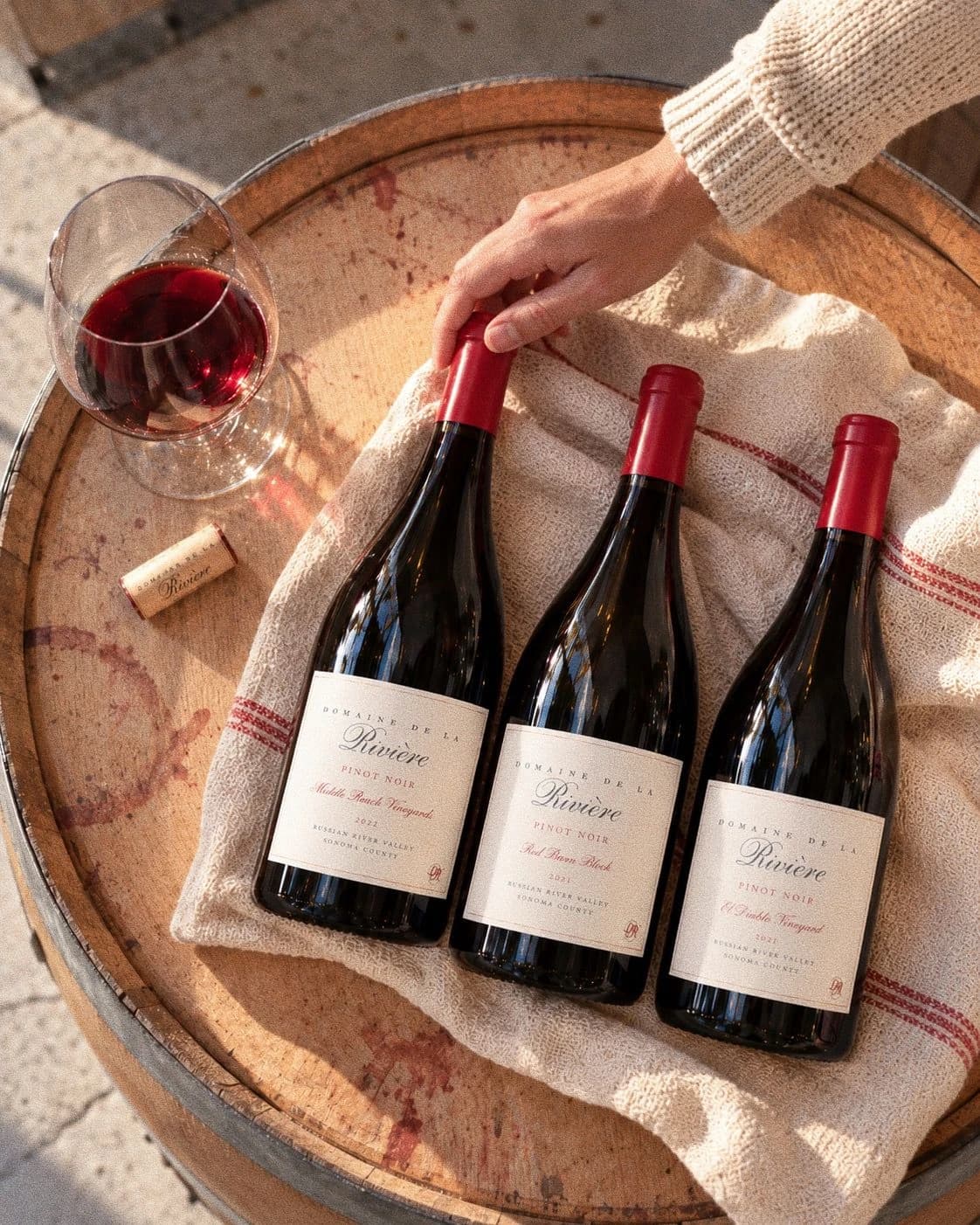
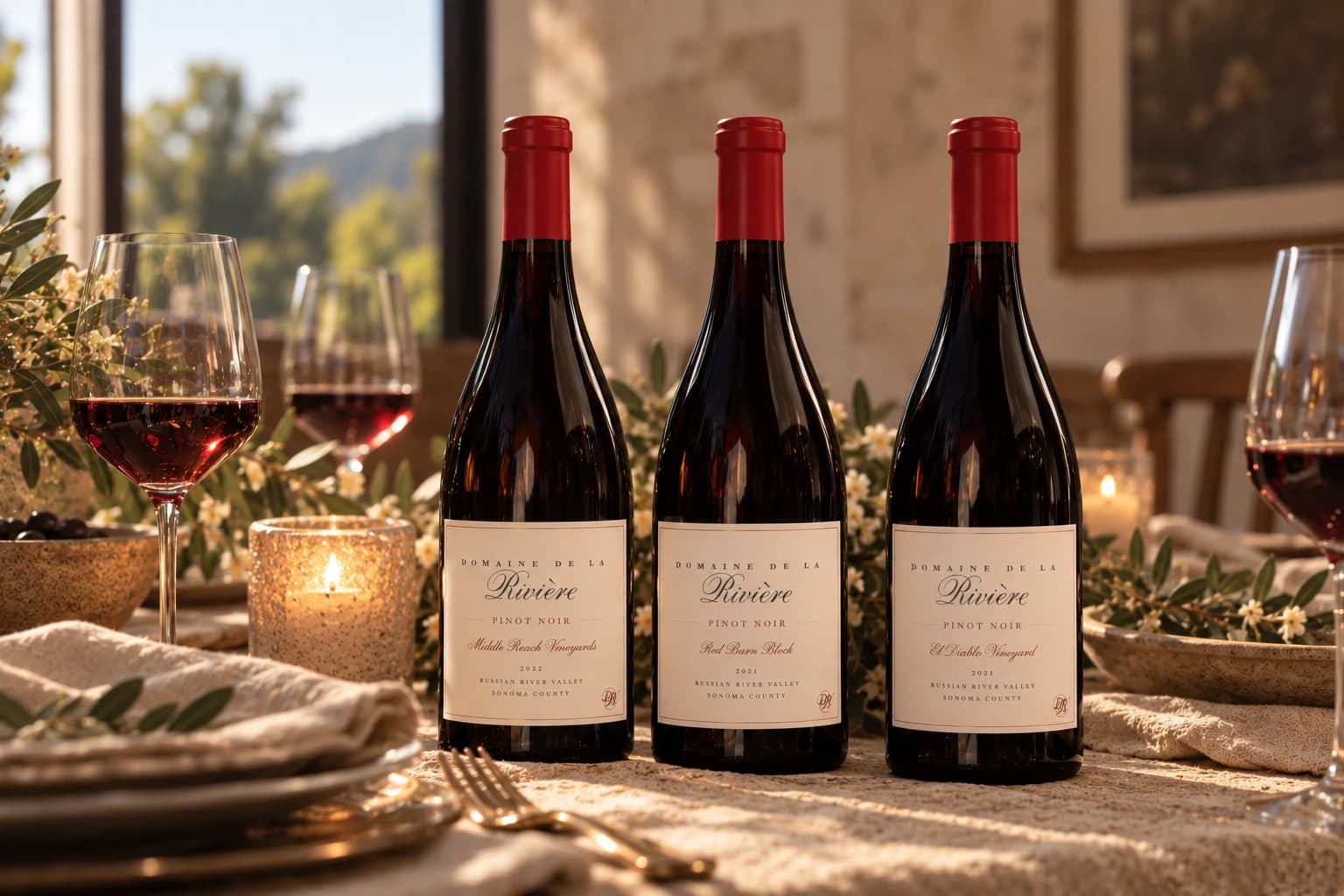
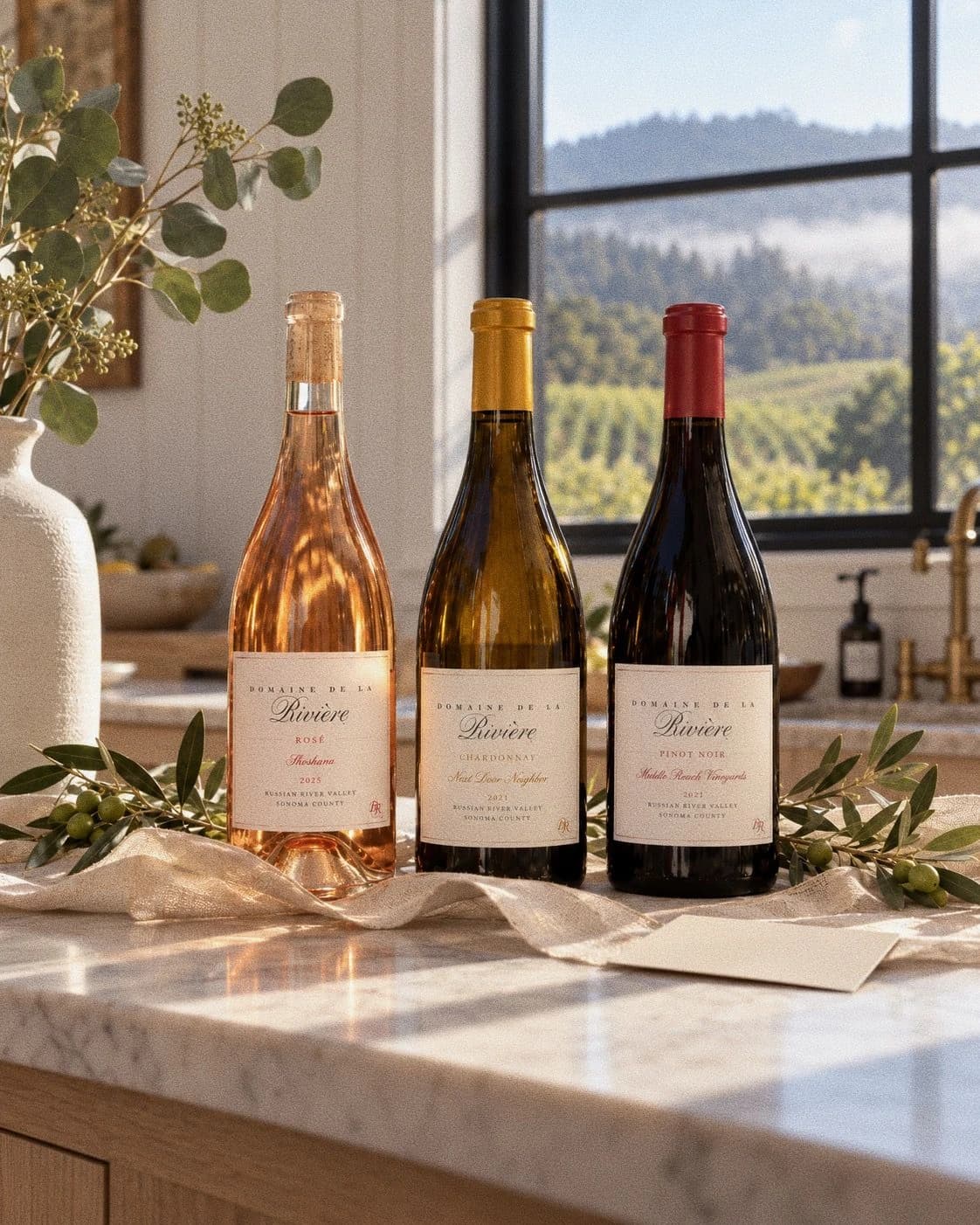
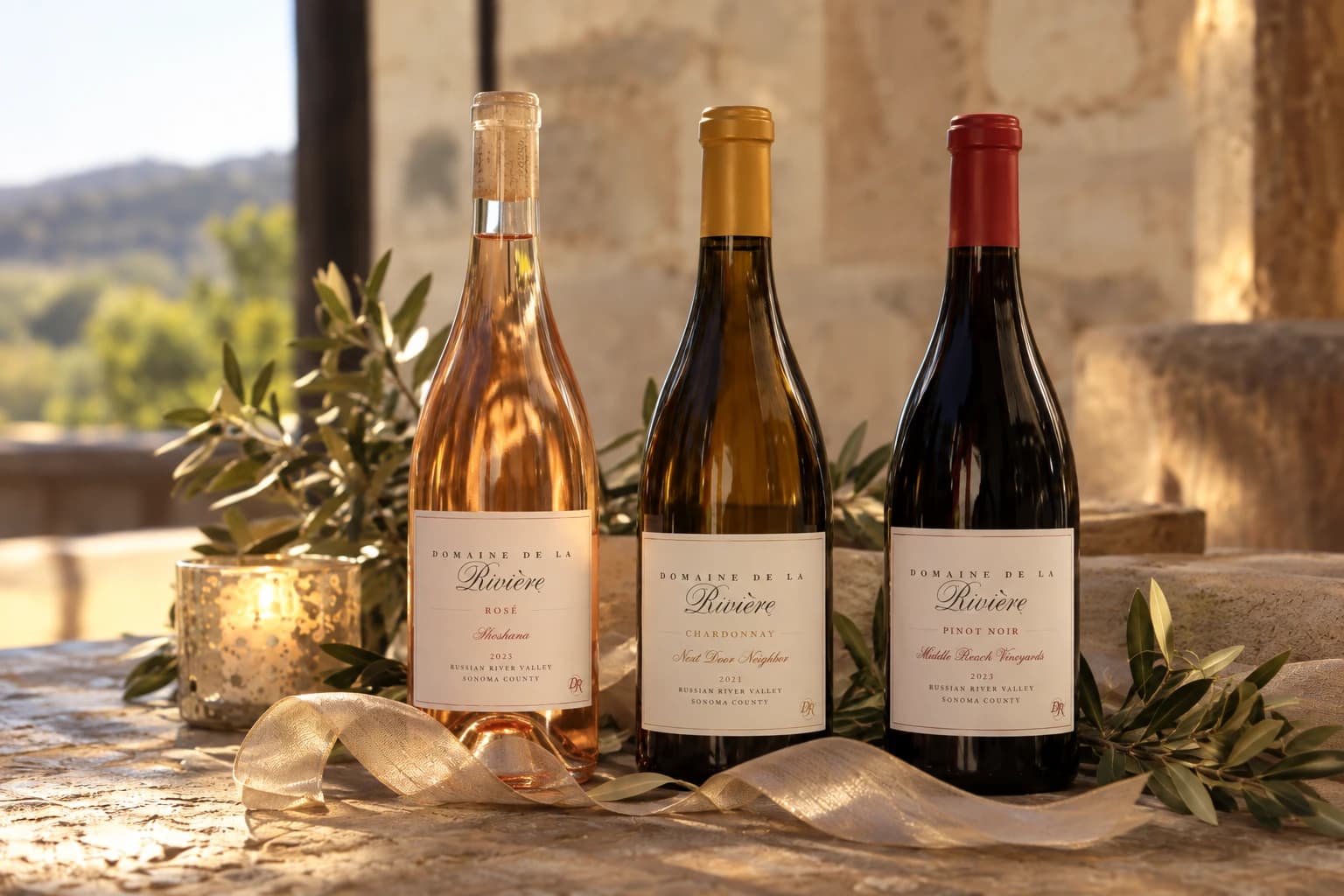
Domaine de la Rivière makes Pinot Noir, Chardonnay and a dry Rosé of Pinot Noir in the Middle Reach of the Russian River Valley. Each follows the standard range for its style: Pinot Noir at 55–60°F, Chardonnay at 50–55°F, and Rosé at 45–50°F. These four bottles show the range, from the coolest pour to the warmest.


Shop the Set
Curated collections
What temperature should Pinot Noir, Chardonnay and Rosé be served at?
Serve Pinot Noir at 55–60°F (13–16°C), a little below room temperature. Serve Chardonnay at 50–55°F (10–13°C), with fuller, oaked styles at the warmer end. Serve dry Rosé and crisp whites colder, at 45–50°F (7–10°C). Fuller reds such as Cabernet Sauvignon go warmest, at 60–65°F (16–18°C).
| Wine style | Serve at (°F) | Serve at (°C) | Why |
|---|---|---|---|
| Dry Rosé, sparkling, crisp whites | 45–50°F | 7–10°C | Cold keeps them bright and refreshing; fruit stays lifted. |
| Chardonnay, lean and unoaked | 48–52°F | 9–11°C | Cool enough for crisp acidity, warm enough to smell the fruit. |
| Chardonnay, fuller and oaked | 52–55°F | 11–13°C | A few degrees warmer lets the texture and toasty notes show. |
| Pinot Noir and other light reds | 55–60°F | 13–16°C | Cellar-cool sharpens red fruit and keeps alcohol in check. |
| Full-bodied reds (Cabernet, Syrah, Zinfandel) | 60–65°F | 16–18°C | More tannin and body; too cold and they taste hard. |
Most homes sit around 68–72°F, and a refrigerator runs near 38°F. So the practical rule is simple: reds come down a little from the counter, and whites come up a little from the fridge. A wine warms a degree or two in the glass every few minutes, so start slightly cooler than the target.
Should Pinot Noir be chilled?
Yes, lightly. Pinot Noir tastes best at 55–60°F, which is cooler than most rooms. From a 70°F counter, 15 to 20 minutes in the refrigerator brings it into range. The chill tightens the fruit, brightens the acidity and keeps the alcohol from reading as warmth on the finish.
"Serve red wine at room temperature" dates from rooms that were closer to a cool cellar than a heated apartment. Pinot Noir is light in tannin and relies on aroma and acidity, so it suffers most when it's warm. Cool-climate Pinots, such as those from the Russian River Valley, have fresh acidity to begin with, and a short chill lets it carry the fruit.
Don't serve it fridge-cold. At 40°F the aromas shut down and the wine tastes thin. If you've left a bottle in the refrigerator overnight, pull it out 30 to 45 minutes before dinner. For Domaine de la Rivière's Middle Reach Vineyards Pinot Noir or Two Forces Pinot Noir, a bottle poured on the cool side and allowed to warm through the meal shows the most range.
How long should you chill wine in the fridge or an ice bucket?
In the refrigerator, a red at room temperature needs 15 to 20 minutes to reach 55–60°F, and a white or rosé needs about two to three hours to reach 45–50°F. An ice-and-water bath is much faster: roughly 5 to 10 minutes for Pinot Noir and 20 to 30 minutes for a white or rosé.
| Wine, starting point | Refrigerator | Ice-and-water bucket | Counter |
|---|---|---|---|
| Pinot Noir from a 70°F room | 15–20 minutes | 5–10 minutes | Not needed |
| Pinot Noir from the fridge (38°F) | Not needed | Not needed | 30–45 minutes |
| Chardonnay from a 70°F room | About 2 hours | 15–20 minutes | Not needed |
| Chardonnay from the fridge | Not needed | Not needed | 10–20 minutes (fuller styles longer) |
| Rosé from a 70°F room | 2–3 hours | 20–30 minutes | Not needed |
| Rosé from the fridge | Not needed | Not needed | 5–10 minutes |
These are approximate. A full bucket works faster than a half-empty one, a thin bottle chills faster than a heavy one, and a crowded refrigerator is slower than an empty shelf.
What is the fastest way to chill a bottle of wine?
An ice-and-water bath is the fastest safe method. Fill a bucket or pot with equal parts ice and cold water, submerge the bottle to the neck, and add a handful of salt. Water touches the whole bottle, so it pulls heat out far faster than ice alone or the freezer.
- Fill the bucket. Half ice, half cold water, deep enough to reach the bottle's shoulders.
- Add salt. A generous handful lowers the melting point of the ice and makes the water colder.
- Submerge and turn. Set the bottle in and give it a slow twist every few minutes so the wine inside mixes.
- Check and pour. Pinot Noir is usually ready in 5 to 10 minutes; a white or rosé in 20 to 30. Dry the bottle before pouring.
The freezer works in a pinch, but set a timer for 15 to 20 minutes. A forgotten bottle can freeze, push its cork or crack. Wrapping the bottle in a wet paper towel first speeds it up. Frozen grapes or reusable ice cubes can cool a glass that's already poured without watering it down.
Should red wine be chilled?
Most red wine benefits from being a little cooler than room temperature. Light, low-tannin reds such as Pinot Noir, Gamay and many Grenache blends go to 55–60°F. Bigger reds such as Cabernet Sauvignon and Syrah are best at 60–65°F, so they need only 10 minutes or so in the fridge.
Tannin is the dividing line. Cold makes tannin feel firmer and more bitter, so a structured Cabernet served at 55°F can taste hard. Pinot Noir has little tannin, which is why it takes a deeper chill well. A Cabernet is still the classic match for a rare steak; when the table is salmon, duck, mushrooms or roast chicken, a cellar-cool Pinot Noir is often the easier wine.
What happens if wine is served too cold or too warm?
Too cold, wine loses its aroma, its fruit tastes muted, and reds turn tannic and tart. Too warm, alcohol comes forward, the fruit tastes flat or jammy, and the wine feels heavy. Neither ruins a bottle for good. Temperature is the easiest thing to fix at the table.
- Over-chilled Pinot Noir: closed nose, sharp acidity, tannin more noticeable. Cup the bowl in your hand for a minute or two.
- Over-chilled Chardonnay: tastes lean and simple, the texture disappears. Leave the bottle on the table for ten minutes.
- Warm Pinot Noir: smells of alcohol, the fruit turns soft and stewed. Five minutes in an ice bath brings it back.
- Warm Rosé: loses its snap and tastes flat. Twenty minutes in ice water.
Is Pinot Noir a red or white wine?
Pinot Noir is a red wine made from a black-skinned grape. Its juice is nearly clear; the color comes from the skins during fermentation. Because Pinot's skins are thin, the wine is lighter in color and tannin than most reds. Pressed quickly, the same grape also makes rosé and white sparkling wine.
That's why Pinot Noir sits in an in-between place for serving: a red that likes a chill. Its thin skins give translucent ruby color and soft tannin, and cool growing regions keep its acidity high. Domaine de la Rivière's Shoshana Rosé of Pinot Noir shows the other side of the grape. The estate Pinot Noir is whole-cluster pressed, so the juice spends very little time on the skins and comes out pale copper and dry.
| Wine from Pinot Noir grapes | How it's made | Color | Serve at |
|---|---|---|---|
| Pinot Noir (red) | Fermented with the skins for days or weeks | Translucent ruby | 55–60°F |
| Rosé of Pinot Noir | Pressed quickly, little skin contact | Pale pink to copper | 45–50°F |
| Sparkling (blanc de noirs) | Pressed very gently, no skin contact | Pale gold | 40–50°F |
Is Chardonnay a dry white wine, and should it be chilled?
Yes, nearly all Chardonnay is a dry white wine: it's fermented until almost no sugar remains. Richer styles can taste sweet from ripe fruit, oak and a creamy texture, but they are not sweet. Chardonnay should be chilled, to 50–55°F, cooler for lean styles and warmer for full, oaked ones.
The words people use for Chardonnay, buttery, toasty, rich, describe texture and flavor rather than sugar. Butteriness comes from malolactic conversion, oak adds vanilla and toast, and stirring the lees adds weight. A cool-climate Chardonnay keeps enough acidity to feel fresh even with those touches. Domaine de la Rivière's Next Door Neighbor Chardonnay is a rounder style, golden apple and lemon curd with brioche, so it opens up best at the warmer end of the range, about 52–55°F. More on styles in our guide to the best California Chardonnay.
Chardonnay from the Russian River Valley, from lean to generous.
Shop ChardonnayHow should you store an opened bottle of Pinot Noir or Chardonnay?
Re-cork any open bottle and put it in the refrigerator, reds included. Cold slows oxidation. Pinot Noir keeps two to three days this way; Chardonnay and Rosé, three to five. Take the Pinot out 15 to 20 minutes before pouring so it warms back to 55–60°F.
| Open wine | Keeps (re-corked, refrigerated) | Before serving |
|---|---|---|
| Pinot Noir | 2–3 days | Out of the fridge 15–20 minutes |
| Chardonnay | 3–5 days | Out of the fridge 10–15 minutes |
| Rosé | 3–5 days | Pour straight from the fridge |
Store the bottle upright to keep less wine in contact with air, and away from the fridge door, where the temperature swings. A vacuum stopper or pouring the leftover into a smaller bottle adds a day or two.
Stoppers, recorking, and how long each style lasts once it's open.
How to Open & Recork a BottleDoes the glass change how wine tastes?
Somewhat. A wide, rounded bowl gathers Pinot Noir's aromas and gives the wine air. Chardonnay suits a medium bowl, wider for oaked styles. Rosé does well in a standard white-wine glass. Holding the glass by the stem matters as much as its shape, because your hand warms the wine.
- Pinot Noir: a Burgundy-style glass with a broad bowl, filled only to its widest point.
- Chardonnay: a medium bowl; a larger one for fuller, oaked styles.
- Rosé: a standard white-wine glass keeps it cool and fresh.
- Any wine: an all-purpose glass is fine. Temperature makes a bigger difference than shape.
Frequently asked questions
- Should Pinot Noir be chilled?
- Yes, lightly, to 55–60°F (13–16°C). From room temperature that takes about 15 to 20 minutes in the refrigerator. A cool-climate Pinot such as Domaine de la Rivière's Two Forces Pinot Noir from the Russian River Valley tastes brighter and more precise with that short chill than it does at room temperature.
- Do you chill Pinot Noir before or after opening?
- Before, ideally. Put the closed bottle in the refrigerator for 15 to 20 minutes, or in an ice-and-water bath for 5 to 10. If it's already open, re-cork it and chill the same way. Leftover Pinot should go back in the fridge and come out 15 to 20 minutes before the next glass.
- Is Pinot Noir served cold or at room temperature?
- Neither. Pinot Noir is served cellar-cool, at 55–60°F, which is cooler than a typical 70°F room and much warmer than a 38°F refrigerator. Too warm, it tastes of alcohol; too cold, its aromas close down.
- Is Pinot Noir red or white?
- Pinot Noir is a red wine made from a black-skinned grape. Its thin skins give it a lighter color and softer tannin than most reds. The same grape, pressed quickly off its skins, makes rosé and white sparkling wine.
- Should Chardonnay be chilled?
- Yes, to 50–55°F (10–13°C). Lean, unoaked styles go at the cooler end; rich, oaked styles taste better a few degrees warmer. Straight from a cold fridge, most Chardonnay is too cold, so let it sit 10 to 20 minutes before pouring.
- Is Chardonnay a dry white wine?
- Yes. Nearly all Chardonnay is fermented dry. Buttery, toasty or rich describe texture and oak, not sugar, so even a full Chardonnay is dry.
- How cold should Rosé be?
- Serve dry Rosé at 45–50°F (7–10°C), about two to three hours in the refrigerator or 20 to 30 minutes in an ice-and-water bath. It can come to the table straight from the fridge.
- Can you put Pinot Noir in the freezer to chill it?
- Briefly, yes. Fifteen to twenty minutes is plenty, and set a timer, since a forgotten bottle can freeze and push its cork. An ice-and-water bath is faster and safer.