
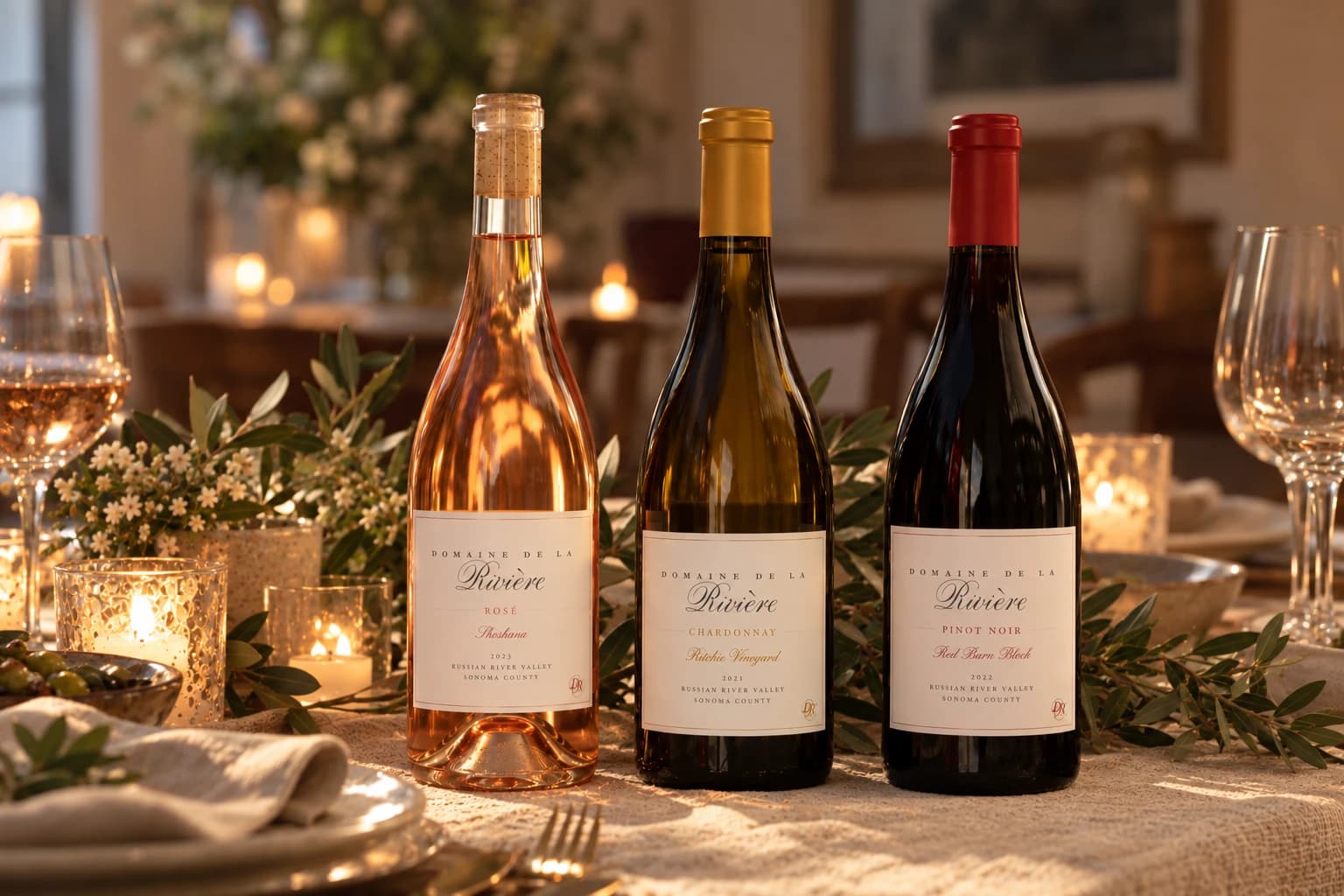
The best client holiday gifts are specific, consumable and easy to place: a single-vineyard wine with published scores, sent with a handwritten note. Domaine de la Rivière, a Russian River Valley family estate, sends clients its 2021 Ritchie Vineyard Chardonnay, one of Robb Report's Top 50 California Chardonnays of the Century, and its 2022 Two Forces Pinot Noir, 98 points from The Tasting Panel.
Below: the wines we send to clients, what makes a client gift work, whether wine is appropriate, how much to spend by tier, how the $25 tax rule works, what counts as a high-end gift that gets used, what to give the client who has everything, how to personalize, when to send, how to ship across state lines, and what to write in the note.
What are the best high-end wine gifts for clients?
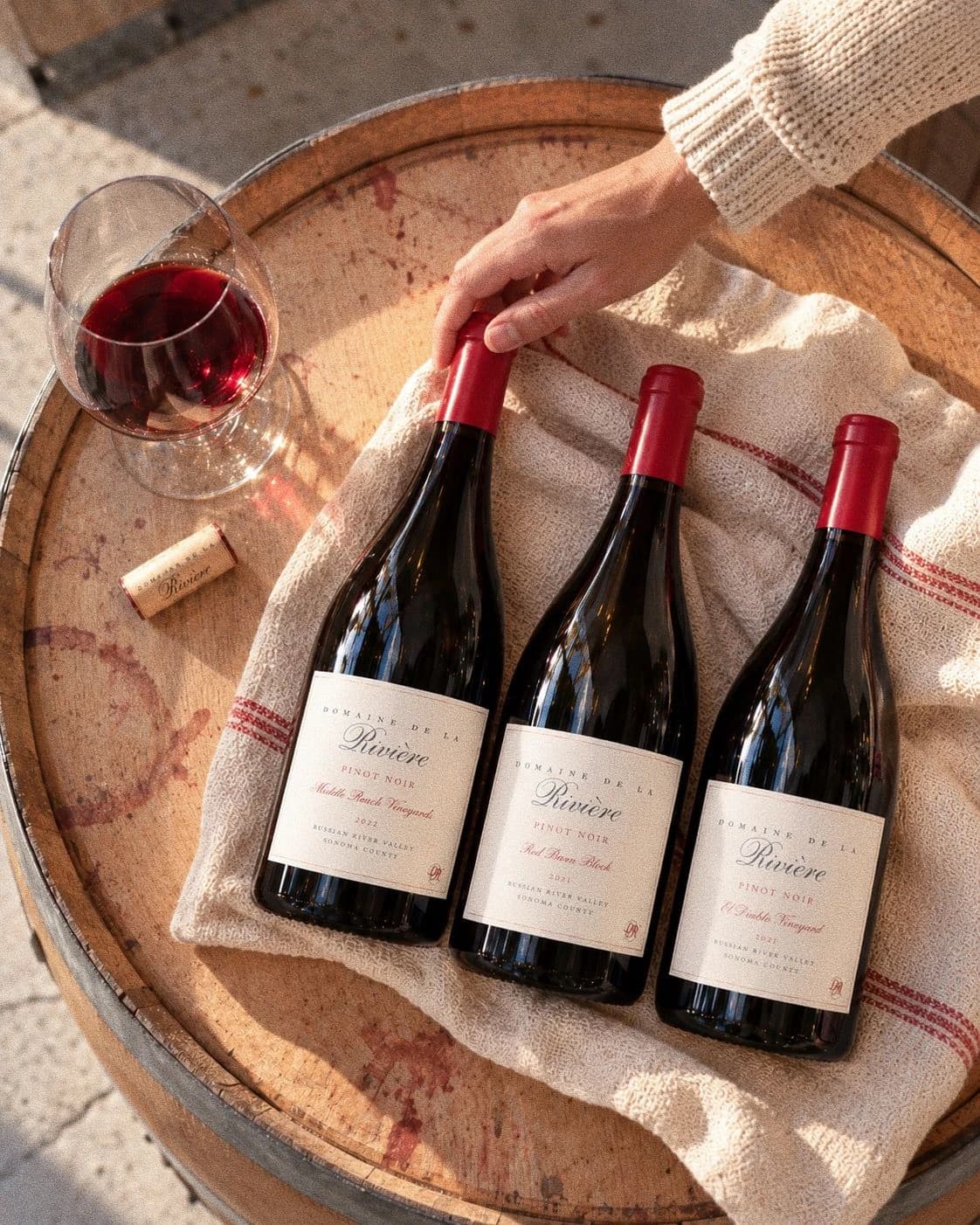
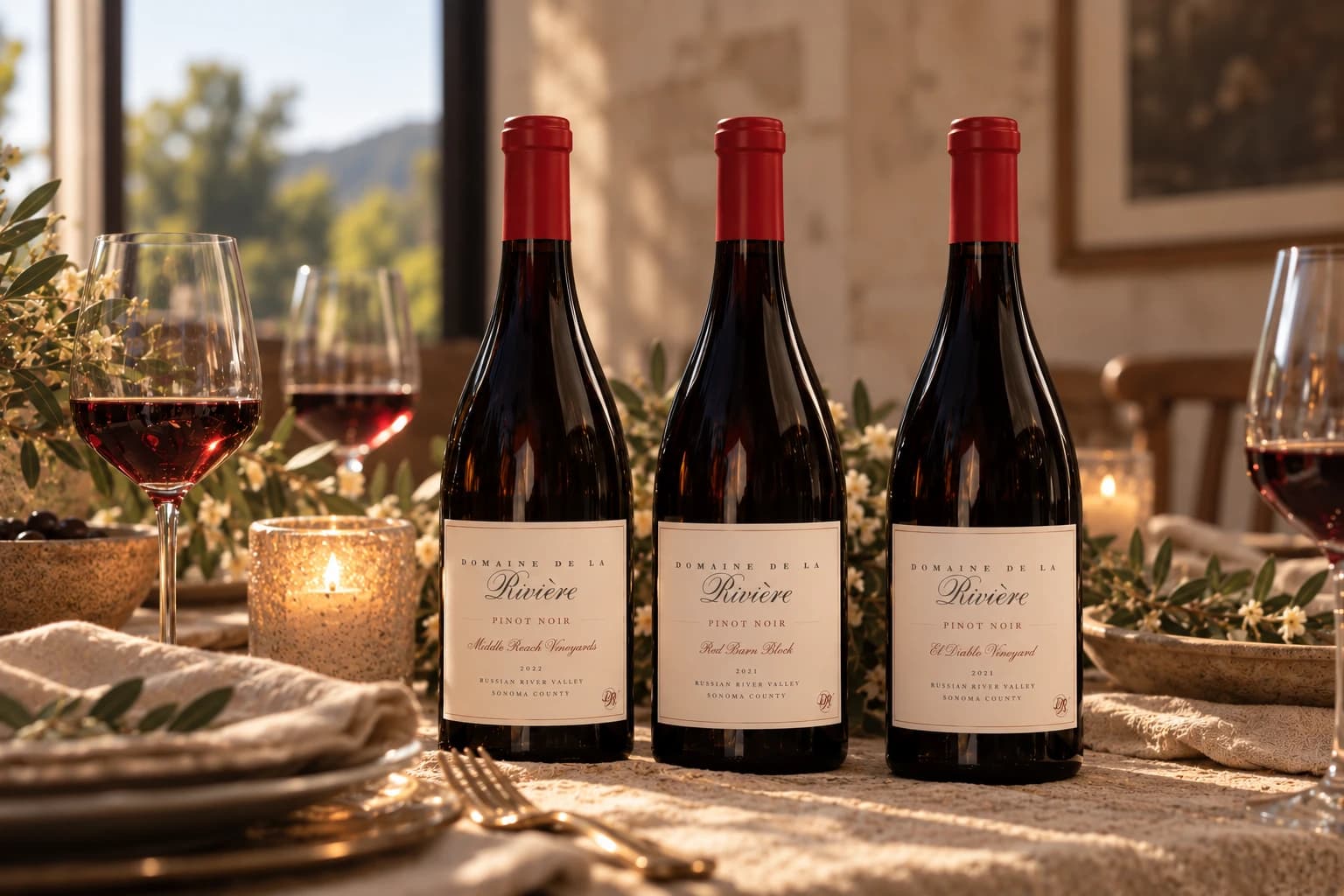
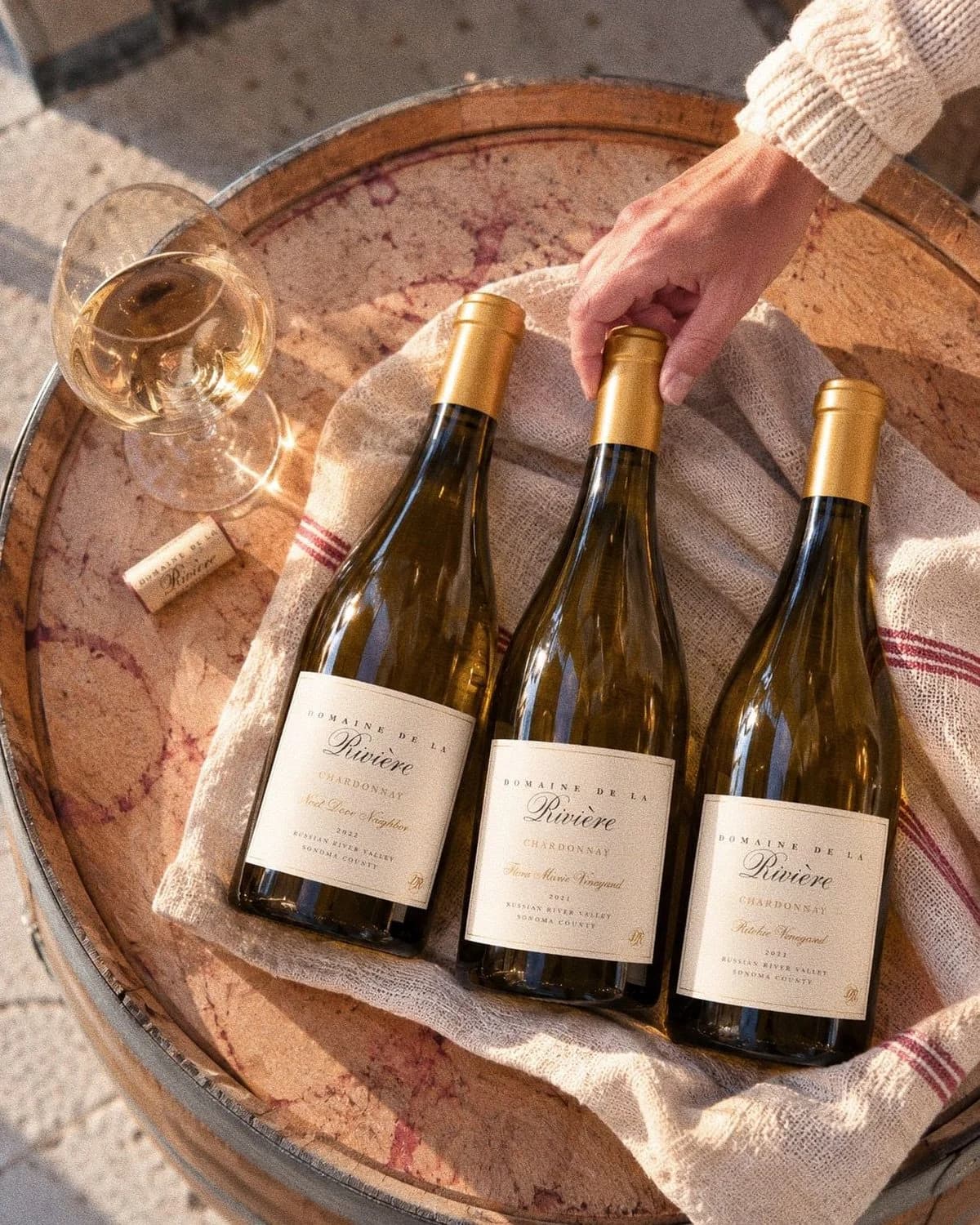
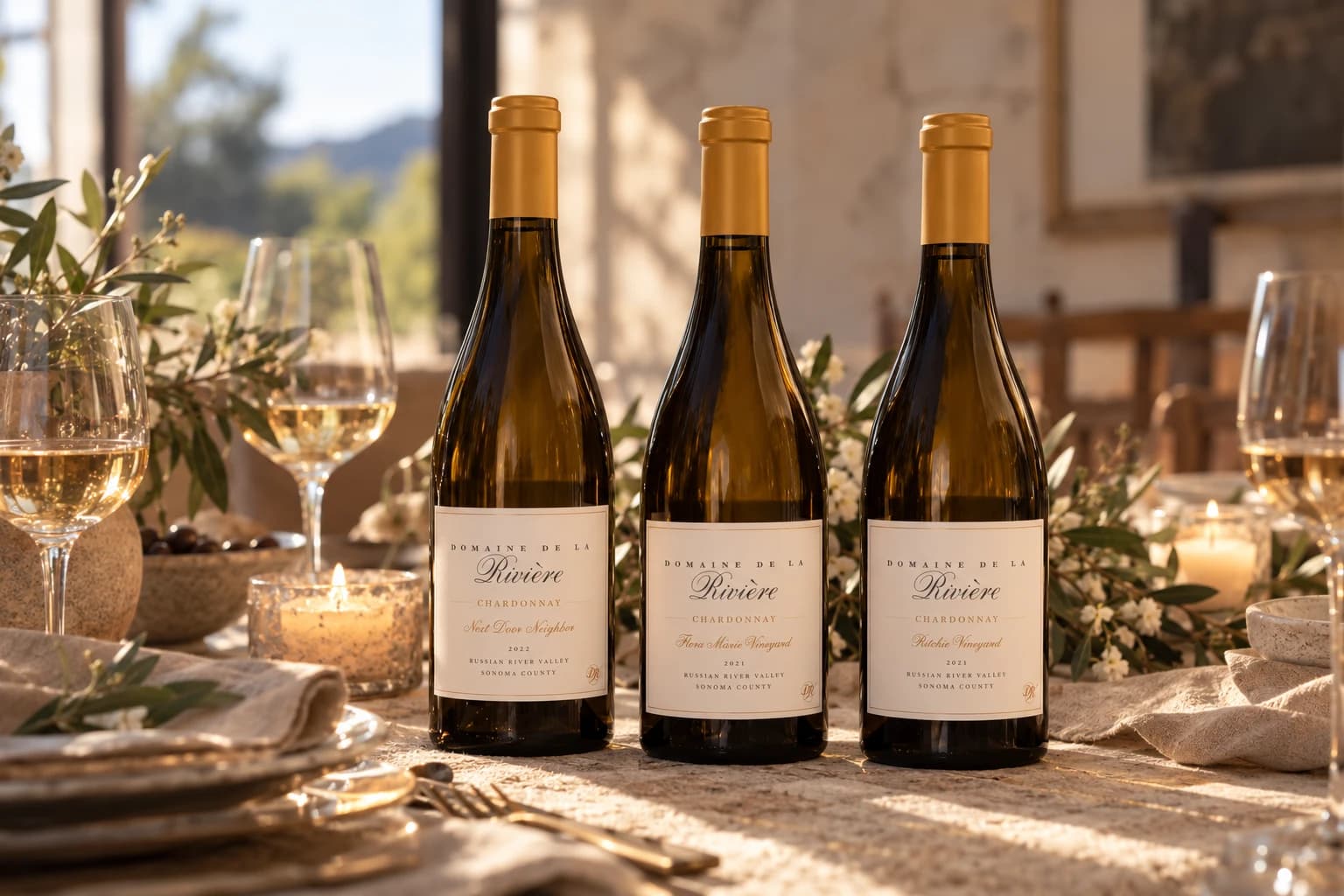
For a client gift, Domaine de la Rivière sends single-vineyard Russian River Valley wines a recipient can look up and find the same scores: an old-vine Chardonnay for white-wine drinkers, three estate Pinot Noirs for red drinkers, magnums for the top of the list, and three-bottle sets for a client who should receive more than one bottle.


In magnum
A magnum holds two bottles, about ten glasses, and is the format clients tend to save for an occasion rather than open on a Tuesday. The wine also ages more slowly in the larger bottle. We make very few.
Shop the Set
Curated collections

What makes a good client holiday gift?
A good client gift is specific, consumable, arrives on time and carries a story the client can repeat. It says something about the recipient rather than the sender, so a large logo works against it. One well-chosen item with a handwritten note does more than a heavy box of unrelated things.
- Specific. A named vineyard, a vintage and a published score read as chosen. A generic basket reads as ordered from a list.
- Consumable. Food and wine get used and leave no clutter. Desk objects and branded merchandise tend to end up in a drawer.
- A story behind it. The client should be able to say where it came from at their own dinner table: who made it, where, and why it's good.
- On time. A gift that lands the week offices close, or after the holiday, loses most of its effect.
- Restrained branding. If your company's name appears at all, it should be small and permanent, such as an etched line on the bottle, not a printed sticker.
The note matters as much as the gift. Two or three lines from the person who manages the relationship, mentioning something from the year's work, is what clients remember. A printed card signed by a whole department is easy to skip.
Is wine a good gift for clients?
Yes, for most clients. Wine is consumable, has a clear origin and suits the end of the year. Three caveats: confirm the person drinks, check their company's gift policy, and know their industry. Many companies cap gifts at a nominal value, and government employees face strict limits on what they can accept.
If you don't know whether a client drinks, ask someone who does. Some people avoid alcohol for health, faith or personal reasons, and a bottle they have to pass along is awkward for both sides. Keep a non-alcoholic alternative ready.
- Check the recipient's gift policy. Public companies, banks, healthcare systems and regulated firms often set a dollar cap or require gifts to be reported.
- Government employees at every level have strict rules on accepting gifts from contractors and vendors; when in doubt, send a card instead.
- Some offices don't allow alcohol on the premises. Ask before shipping wine to a hospital, school or government building.
- Your own compliance team may have rules too, especially in finance, healthcare and government contracting.
How much should you spend on a client gift?
Most businesses spend $50 to $75 per person on a broad client list, $100 to $150 on key accounts and $200 or more on their top clients. Referral partners usually sit between key accounts and top clients. These are common ranges, not rules; the recipient's gift policy sets the real ceiling.
| Tier | Common range | What fits |
|---|---|---|
| Broad client list | $50–$75 | One good bottle with a short note, the same for everyone |
| Key accounts | $100–$150 | A single-vineyard bottle with published scores, or a white-and-red pair |
| Top clients | $200 and up | A magnum, a three-bottle collector set, or an etched bottle |
| Referral partners | $100–$200 | A pair or a set meant to be shared, with a specific thank-you |
Tiering is normal, but keep it consistent: clients at the same level should receive the same gift, because they talk to each other. For reference, Domaine de la Rivière's three-bottle sets run $199 to $255 with $25 flat-rate shipping, and the 2021 Ritchie Vineyard Chardonnay magnum, the Robb Report Top 50 Chardonnay in the larger bottle, is $195. The 2022 Two Forces Pinot Noir magnum is $215.
Gifting a whole team as well as clients? The corporate guide covers employee budgets, sending to many addresses and putting a logo on the bottle.
Corporate Wine GiftsAre client gifts tax deductible?
Partly. Under IRS Publication 463, a U.S. business can deduct no more than $25 for business gifts given directly or indirectly to each person in a tax year. Incidental costs such as engraving, packaging and shipping generally don't count toward the $25. A $150 gift to one client yields a $25 deduction plus those incidental costs.
| Situation | How Publication 463 treats it |
|---|---|
| A gift to one client | Deductible up to $25 per recipient per tax year |
| Engraving, packaging, insurance, shipping | Incidental costs; generally not counted toward the $25 |
| A gift to a client's spouse or family | Generally treated as a gift to the client |
| A gift to a company, meant for a particular person | An indirect gift to that person; the $25 limit applies |
| A gift to a company for general business use, not a person | May be treated differently from a personal gift |
| Tickets to a game or show | Can fall under gift or entertainment rules, which differ |
The $25 figure has not changed in decades, so most client gifts exceed it, and businesses give them anyway for the relationship rather than the deduction. Gifts to employees follow separate rules and may count as wages. Keep a record of each gift's cost, date, recipient and business reason. This is a summary, not tax advice; consult your tax advisor about how the rules apply to your business.
What is a high-end corporate gift that actually gets used?
Consumables get used; objects usually don't. A high-end corporate gift that lands is something the client opens with people they care about: a single-vineyard wine with published scores, a magnum for a holiday table, or a set of three bottles. The price shows less than the choice does.
| Gift | What usually happens to it |
|---|---|
| Branded merchandise | Kept in a drawer or given away; the logo is the point, which clients notice |
| Mixed gift basket | Shared around the office; rarely remembered by who sent it |
| Single-vineyard wine with a score | Opened at a dinner or saved for one; the client can look it up |
| A magnum | Saved for a holiday or celebration; the bottle often outlasts the wine |
| An experience, such as a tasting | Remembered longest, but harder to schedule |
Scores matter for client gifts in a particular way: they let the recipient know what they were given without anyone stating a price. Domaine de la Rivière's 2022 Two Forces Pinot Noir, 98 points from The Tasting Panel and a Double Gold at the San Francisco Chronicle International Wine Competition, comes from the estate's Vineyard eleven and El Diablo Vineyard, with black cherry, rose petal and baking spice over fine-grained tannin. It reads as considered because it is specific.
What do you give a client who has everything?
Give something they can't buy at the store on their way home: a magnum from a small estate, a bottle etched with their name, a library-style set of three single-vineyard wines, or an invitation to taste with the family that made it. Scarcity and a personal connection matter more than price for this client.
- A magnum. Few are made, and a 1.5-liter bottle of the 2021 Ritchie Vineyard Chardonnay, one of Robb Report's Top 50 California Chardonnays of the Century, or the 98-point 2022 Two Forces Pinot Noir is rarely already in their cellar.
- A bottle etched with their name. Permanent, one of a kind, and kept on a shelf after the wine is gone.
- A collector set. The Pinot Noir Collector ($255) puts three single-vineyard Pinots side by side; the Chardonnay Collector ($209) includes the 2021 Ritchie, the Robb Report Top 50 Chardonnay, with the 2021 Flora Marie and Next Door Neighbor.
- An invitation to the estate. A seated tasting in Windsor, by reservation for 2 to 8 guests, poured by the family.
The family behind Domaine de la Rivière is part of what makes the last option work. Marla and Geoff Bedrosian, New Yorkers with careers in the city, bought a neglected Pinot Noir vineyard in the Middle Reach of the Russian River Valley in 2011, replanted it from 3,000 miles away and released their first wine in 2017. They still pour the tastings themselves, which is the kind of detail a client who has everything will remember.
Should you personalize client gifts?
Yes, but personalize toward the client, not your brand. A client's name etched into a bottle, or a handwritten note that mentions a project you shared, reads as personal. A company logo can work if it is small and permanent, such as a single etched line, rather than printed across the gift.
Etching cuts the name or mark into the glass in one tone, with no color, so it lasts after the wine is gone. For a single top client, the recipient's name is the stronger choice; for a list of partners, a discreet company mark with the year works. You approve a proof before anything is made, and pricing depends on quantity, wine and bottle size.
Personalization can also be free: choose the wine to match what the client drinks, Chardonnay for the one who orders white at dinner, Pinot Noir for the one who orders red.
When should you send client holiday gifts?
Aim for the gift to arrive in the first two weeks of December, before offices close and before the week carriers are busiest. Thanksgiving gifts stand out because few others arrive then. New Year's gifts avoid the rush entirely. Order a week or two ahead of the date you want it to land.
| Timing | Why choose it | Watch for |
|---|---|---|
| Thanksgiving week | Arrives before the December pile; reads as a thank-you, not a holiday obligation | Offices close Thursday and Friday; ship to arrive by Tuesday |
| First two weeks of December | The standard window; the client is still at the office | Order a week or two ahead |
| Week before Christmas | Still on time for holiday dinners | Carriers are busy; offices start closing |
| New Year's | No competition; a fresh-start note | Many people are away until the second week of January |
Office or home? Wine needs an adult 21 or older to sign at delivery, and an office usually has someone at the front desk during the day, so a work address is often easier. Ship to a home only if the client asks or works from home, and confirm the address first.
How do you send wine to clients in other states?
Order from a winery that ships through a licensed platform. Wine can go to most U.S. states, not all; an adult 21 or older must sign at delivery; and wine can't be sent to a P.O. box. Transit usually takes two to five business days. The destination state's rules apply, not the sender's.
Domaine de la Rivière ships through Vinoshipper, and the checkout confirms the address can receive wine before you pay. Each box comes from the winery, a handwritten gift note is available on request, and gift messages hide the price.
For one client, the gift builder at /gifts/build lets you choose a set or one to six bottles and add a note. For several clients at different addresses, Marla Bedrosian coordinates every address and gift note by hand, replies within a business day, and nothing is charged until you approve. Email marla@domaineriviere.com or call 707-888-1598. The shipping guide covers the state rules in more detail.
What should a client gift note say?
Two to four sentences: thank them for something specific, say one line about the gift, and wish them well. Leave out any sales pitch, any mention of next year's business and any price. Sign it by hand from the person who knows them best.
- "Thank you for trusting us with the launch this year. This Pinot Noir comes from a small family vineyard in Sonoma; we hope it finds a good table over the holidays."
- "Working with your team was the best part of our year. Here's to a quiet December and a good bottle to end it."
- "You sent us more good people this year than anyone. A small thank-you, from one family business to another."
- "This Chardonnay was named one of Robb Report's Top 50 California Chardonnays of the Century. We thought of you. Happy holidays."
Write the note yourself even if the winery prints it; a line only you could have written is the part the client keeps.
Tell us who the gift is for and when it should arrive. We'll suggest the wine, etch a name if you'd like, and send it with your note.
Plan Client Gifts With UsFrequently asked questions
- What is a good holiday gift for clients?
- A single-vineyard wine with published scores and a handwritten note: specific, consumable and easy for the client to look up. Domaine de la Rivière, a Russian River Valley family estate, sends clients its 2021 Ritchie Vineyard Chardonnay, one of Robb Report's Top 50 California Chardonnays of the Century, and its 2022 Two Forces Pinot Noir, 98 points from The Tasting Panel.
- How much should I spend on client gifts?
- Common ranges are $50 to $75 per person for a broad client list, $100 to $150 for key accounts and $200 or more for top clients, with referral partners usually in between. These are not rules: the recipient's gift policy sets the ceiling, and clients at the same tier should receive the same gift.
- Are client gifts tax deductible?
- Partly. IRS Publication 463 limits the deduction for business gifts to $25 per recipient per tax year. Incidental costs such as engraving, packaging and shipping generally don't count toward the $25. Gifts to employees and tickets follow different rules. Consult your tax advisor about your own situation.
- Is wine an appropriate client gift?
- For most clients, yes. Confirm the person drinks, and check their company's gift policy first: many companies limit gifts to a nominal value, some workplaces don't allow alcohol on site, and government employees face strict rules on accepting gifts. Keep a non-alcoholic alternative ready.
- What is a high-end corporate gift?
- One that is scarce, specific and consumable rather than branded: a magnum from a small estate, a three-bottle set of single-vineyard wines, a bottle etched with the recipient's name, or an invitation to a private tasting. High-end gifts work when the choice shows more than the price.
- What do you give a client who has everything?
- Something they can't pick up on their own: a magnum, a bottle etched with their name, a collector set of three single-vineyard wines, or a seated tasting with the family that made the wine. Scarcity and a personal connection count for more than cost.
- When should client holiday gifts arrive?
- In the first two weeks of December, before offices close and carriers get busiest. Thanksgiving week is a good alternative because few other gifts arrive then, and New Year's avoids the rush entirely. Order a week or two ahead of the date you want the gift to land.
- Can you send wine to clients in other states?
- Yes, to most U.S. states but not all, through a winery that ships via a licensed platform. An adult 21 or older must sign at delivery and wine can't go to a P.O. box, so a work address is often easier. Transit usually takes two to five business days.
- Can you put a company logo or a client's name on a wine bottle?
- Yes. Etching cuts a logo, a name or a short message permanently into the glass, so it lasts after the wine is gone. Domaine de la Rivière etches its own Pinot Noir, Chardonnay and Rosé, sends a proof for approval, and ships to one address or many. Pricing depends on quantity, wine and bottle size.
References